Why Ingredient Diversity Matters for Skin Longevity
As skin ages, its needs become more complex. Different botanical oils, fatty acids, antioxidants and specialized ingredients bring different chemistry to a formulation. Here’s why SUI WASSER believes ingredient diversity—not another miracle ingredient—is a better way to think about Skin Longevity.
The Hidden Battle Your Skin Fights After Outdoor Adventures
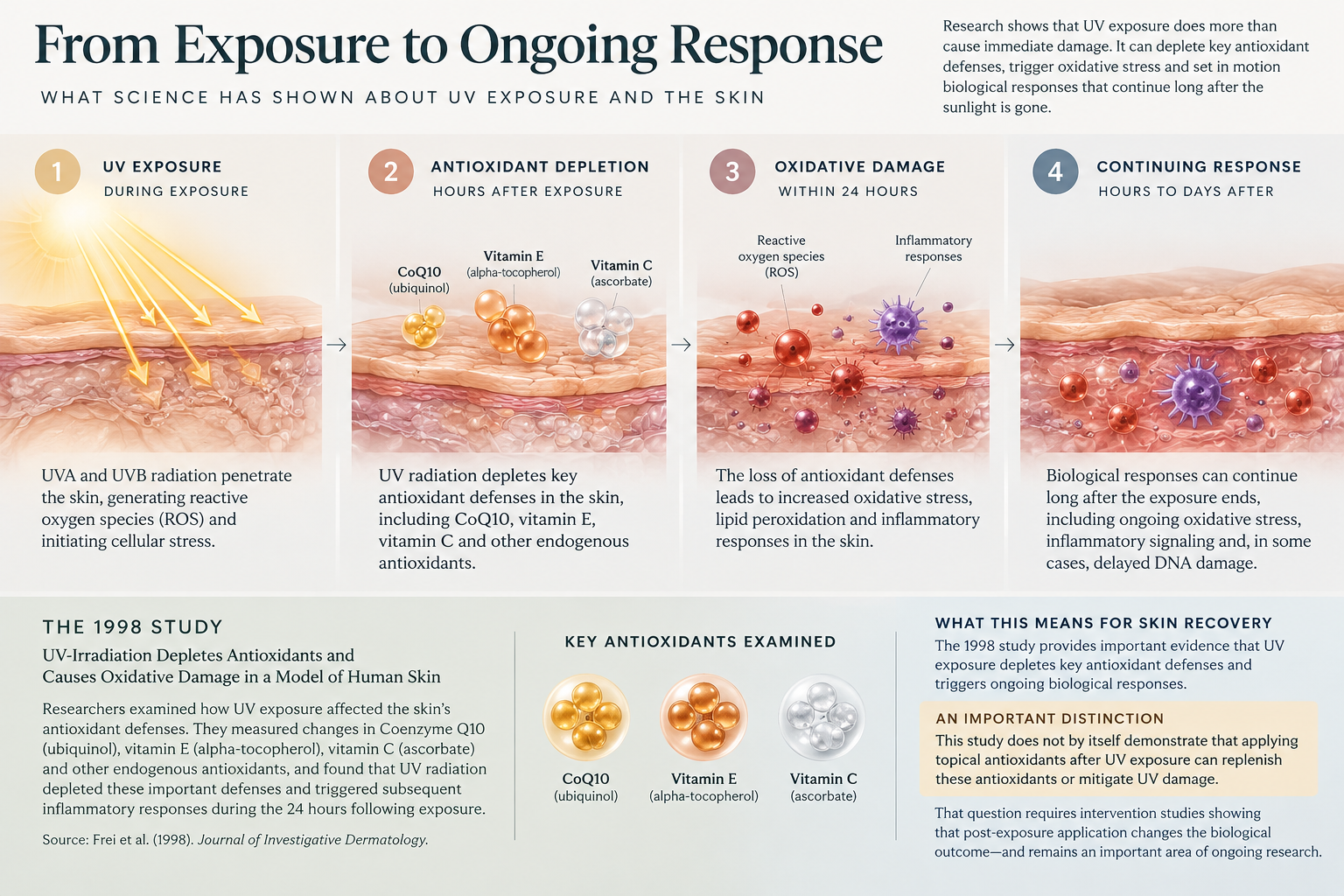
We understand muscle recovery after a hard day outdoors. But what about our skin? Explore the implications of recent research and learn how skin may continue responding after UV and environmental exposure ends—and why recovery deserves more attention.
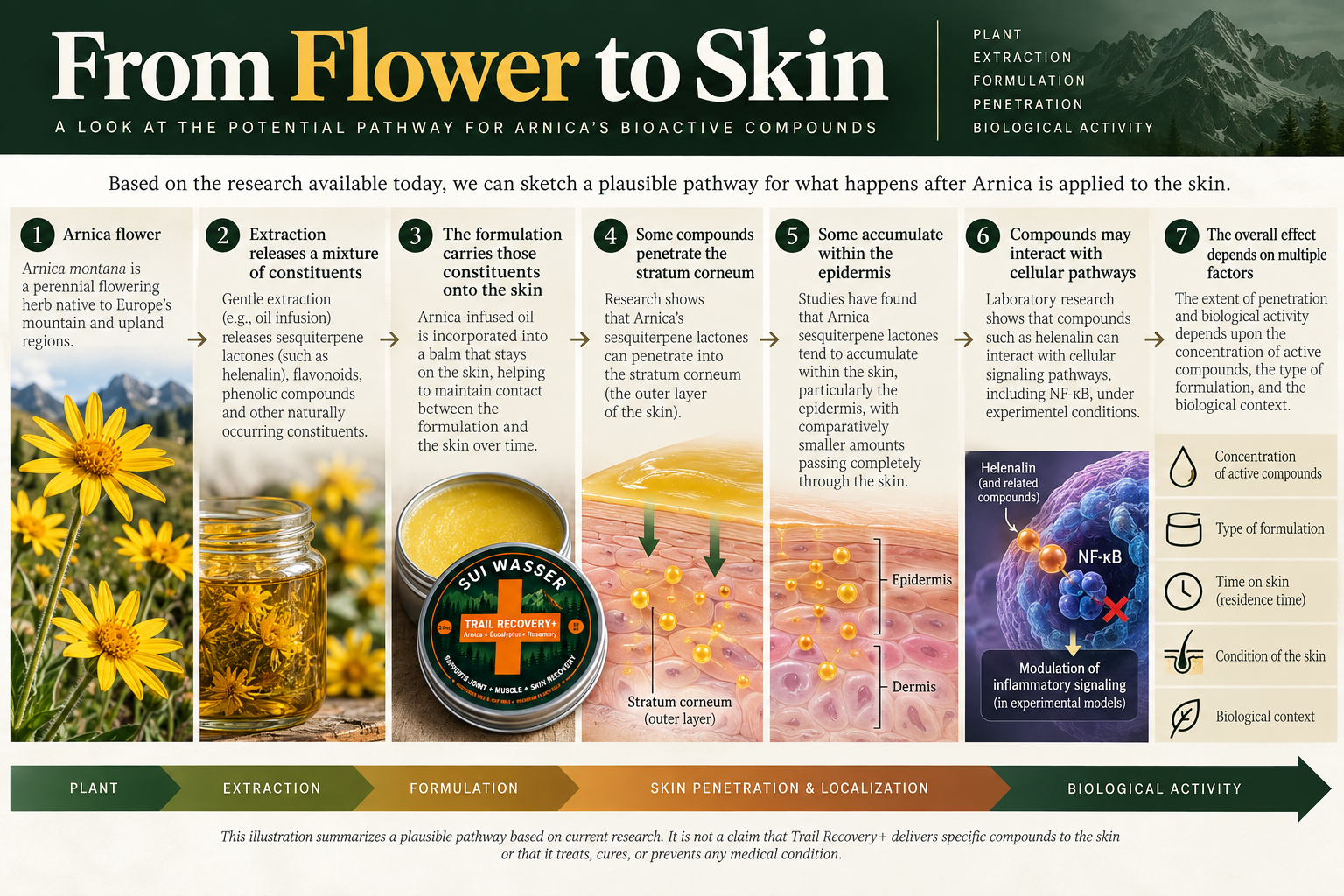
Arnica on the Skin: What Actually Happens After You Apply It?
I’ve used Arnica on my own battered legs for over four decades—with surprisingly inconsistent results. That led to a question: was Arnica inconsistent, or did the way it was extracted, formulated, and delivered to the skin matter? We went looking for answers in the research.
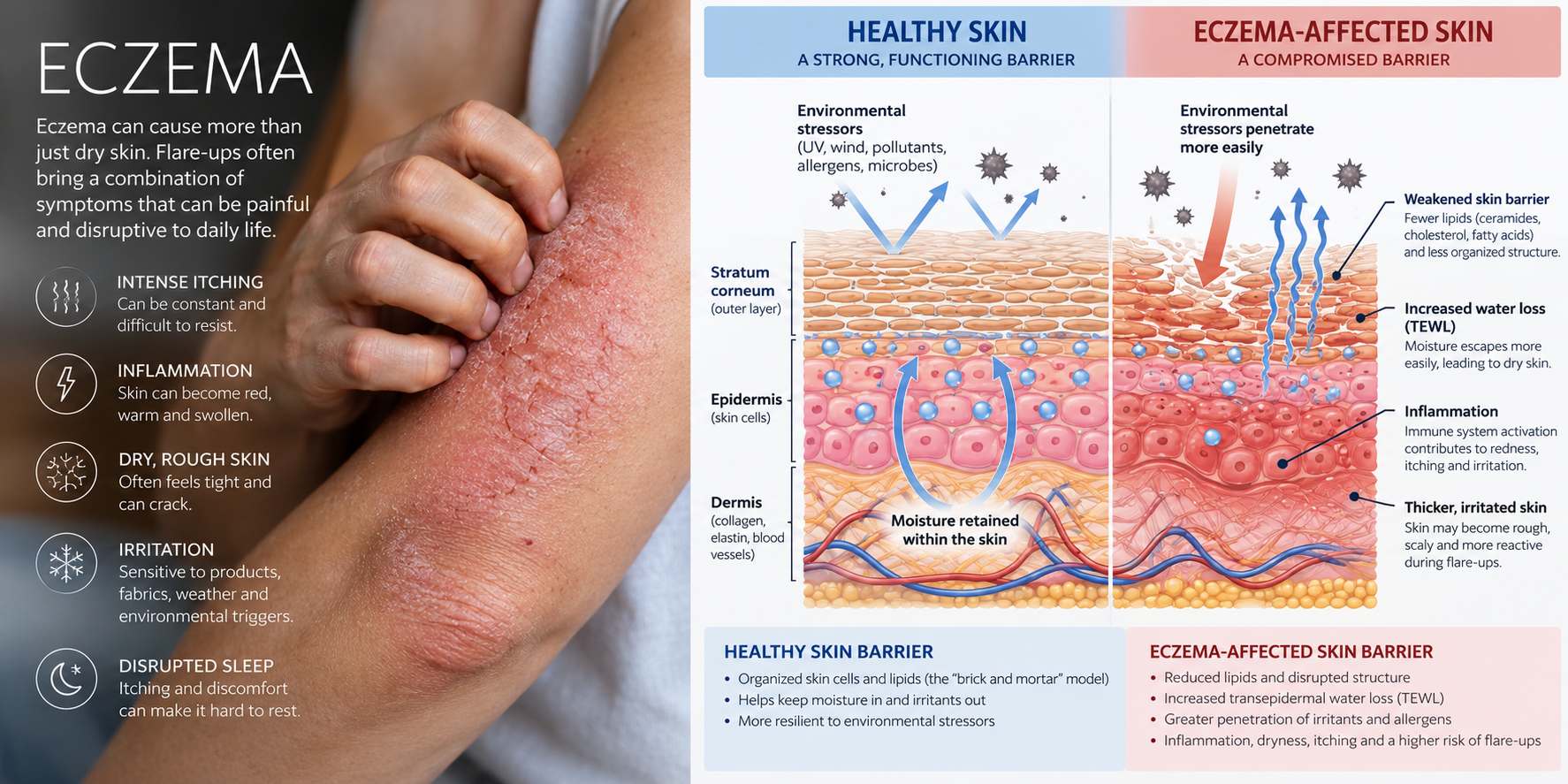
Eczema Awareness Month: What Eczema Can Teach Us About the Skin Barrier
Our skin is not separate from our environment. It is the boundary where our bodies meet it. For Eczema Awareness Month, we explore what eczema can teach us about barrier function, moisture loss, inflammation and caring for the skin that protects us.
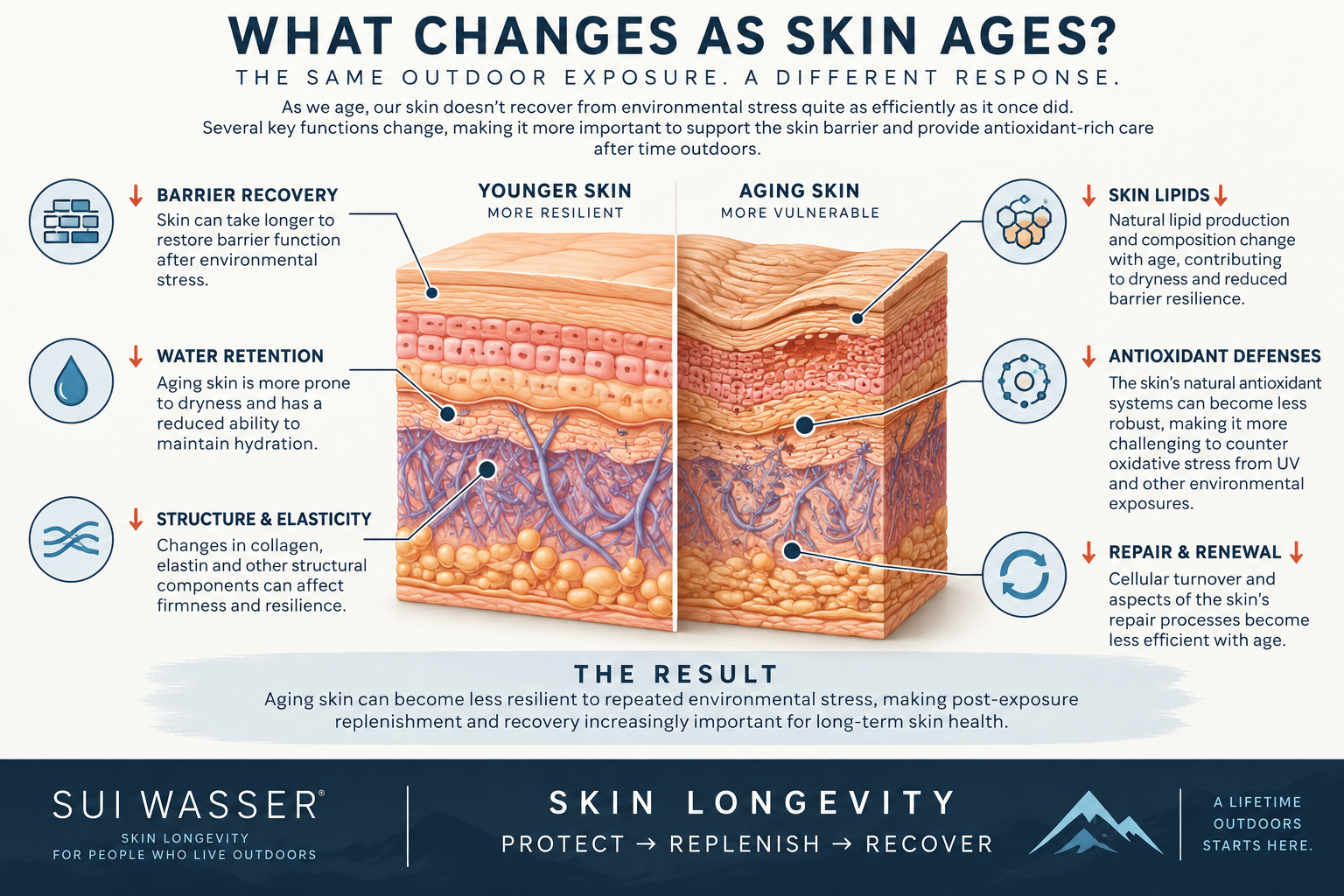
A “Nutrition Bath” for Aging Skin
Our skin changes as we age—but that doesn’t mean our outdoor lives have to. Explore how aging affects the skin barrier, hydration and antioxidant defenses, and why replenishment and recovery become increasingly important for Skin Longevity.
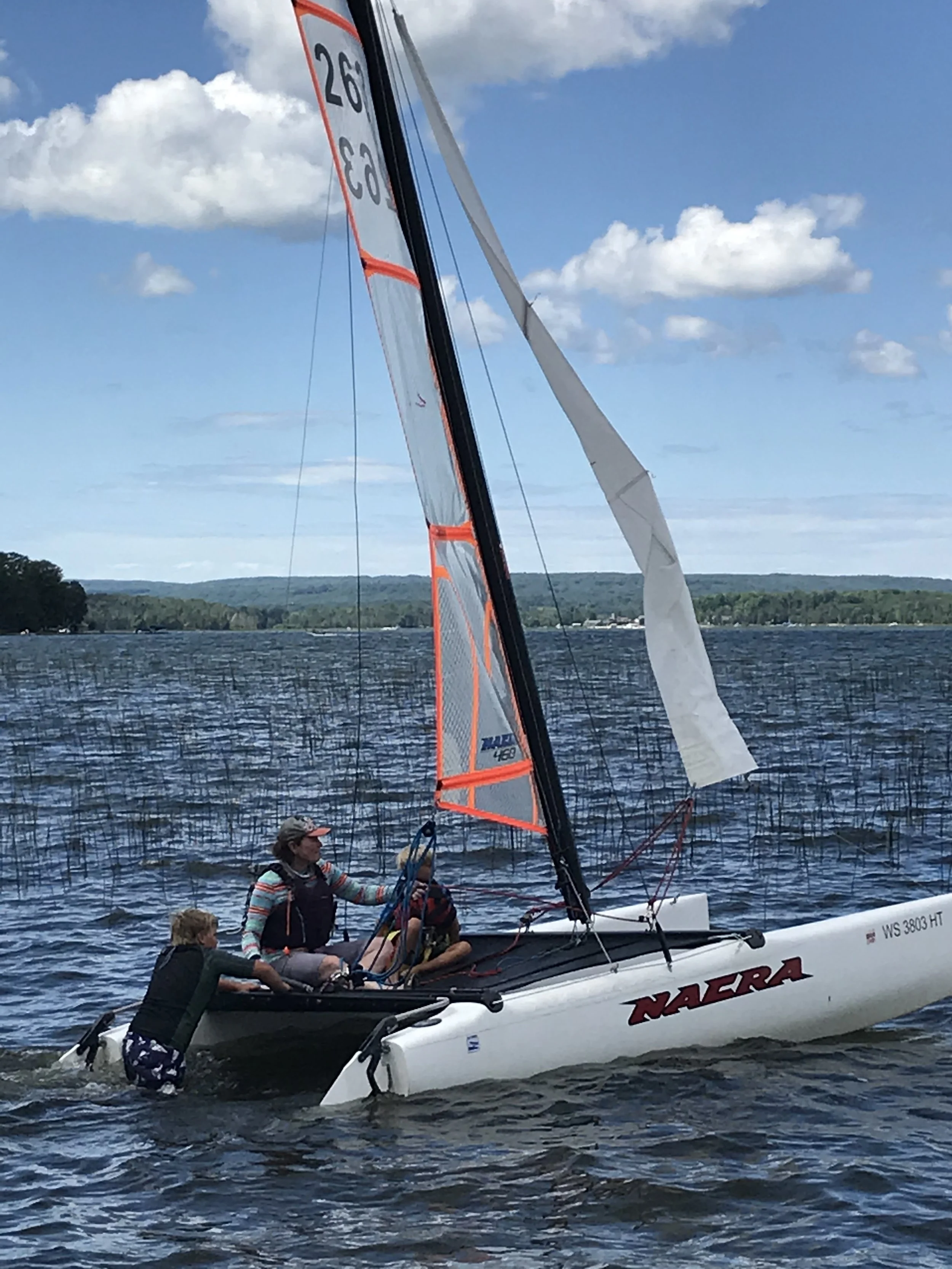
What Does “Post-Exposure Recovery” Actually Mean for Your Skin?
Outdoor exposure doesn’t end when you come indoors. Learn why UV, wind, cold, heat and dry air can continue to challenge the skin—and why barrier replenishment and antioxidant support are becoming important parts of the post-exposure skincare conversation.
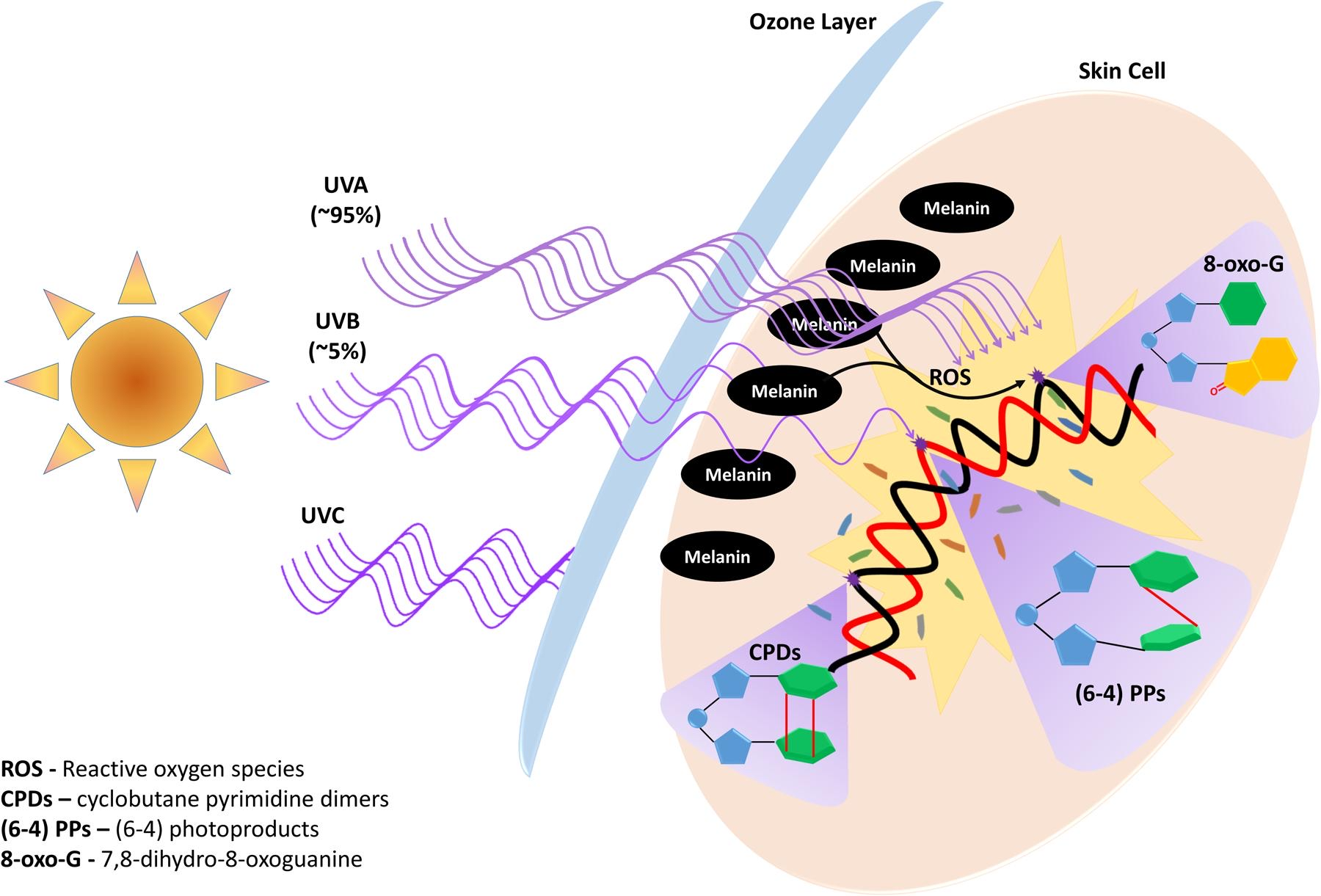
What Happens After UV Exposure? The Emerging Science of Biological Photoprotection
Photoprotection has traditionally focused on preventing UV exposure. Emerging research is asking a broader question: what happens biologically during—and after—solar exposure, and can those processes help us better understand long-term skin health?
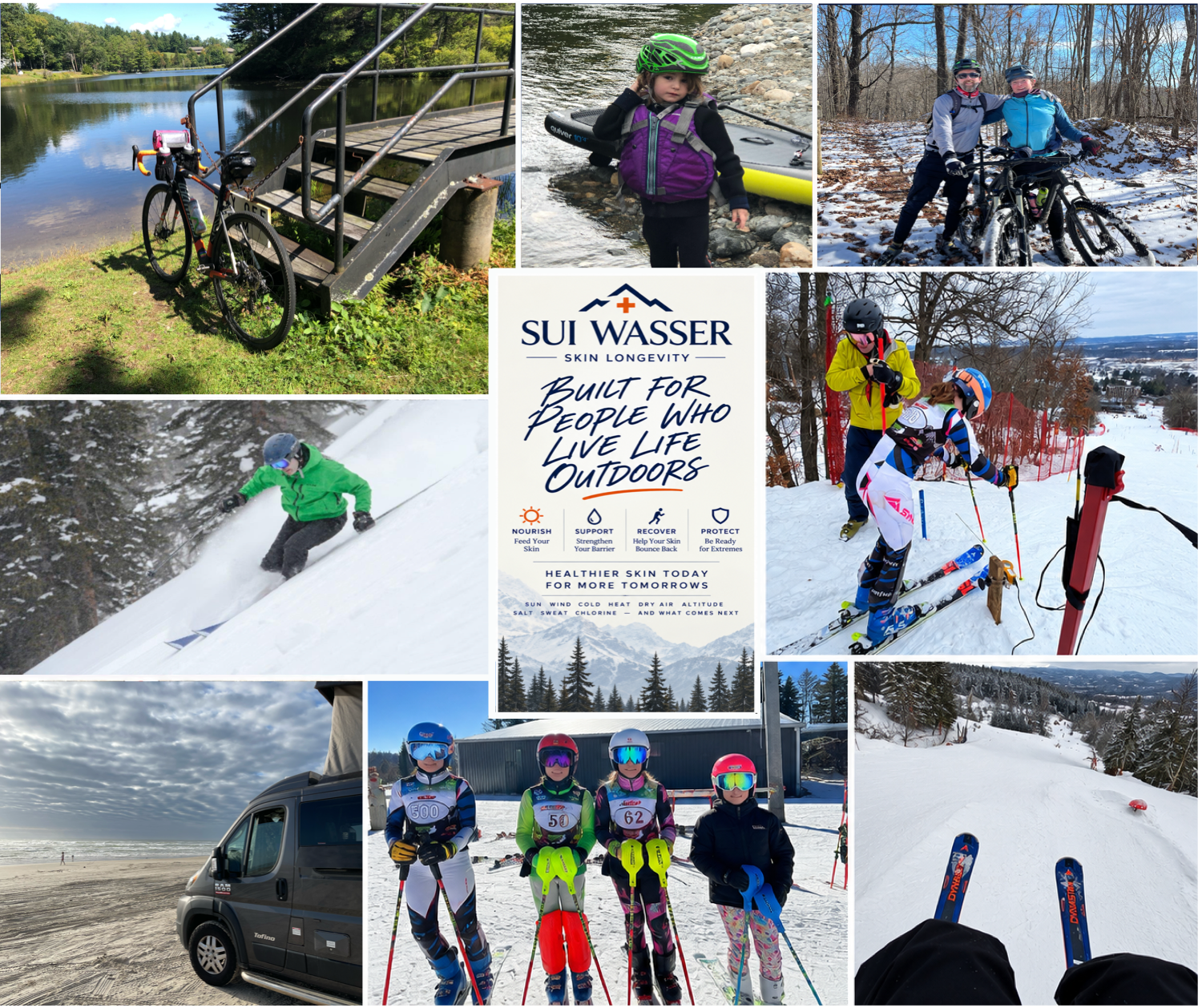
Why Does SUI WASSER Exist? ...and Why Are We Approaching Outdoor Skincare Differently?
We believe outdoor skincare has been approaching the problem ass-backwards.
For decades, outdoor skincare has focused primarily on what we do before exposure. SUI WASSER asks a different question: What should we be doing afterward—and every day—to help our skin keep up with a lifetime spent outdoors?
Protection matters. Sunscreen matters. But for people who spend a lifetime outside, that’s only part of the equation. We built SUI WASSER around the part that’s too often overlooked: what happens to our skin afterward.
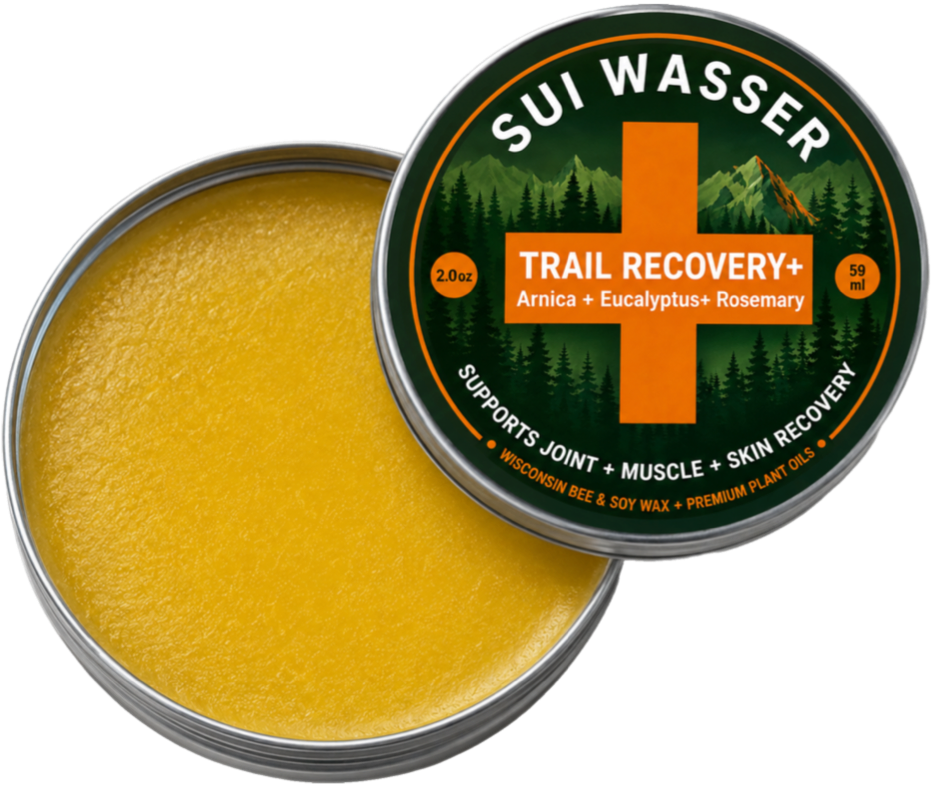
Trail Recovery+ Balm: Why I Built It This Way
After a lifetime of alpine ski racing injuries and 11 major operations, I wanted something better than another ordinary muscle rub. Here’s why I built Trail Recovery+ around Arnica, Meadowfoam Seed Oil, Eucalyptus, Rosemary, Sea Buckthorn and a broader system of botanical oils and antioxidants.
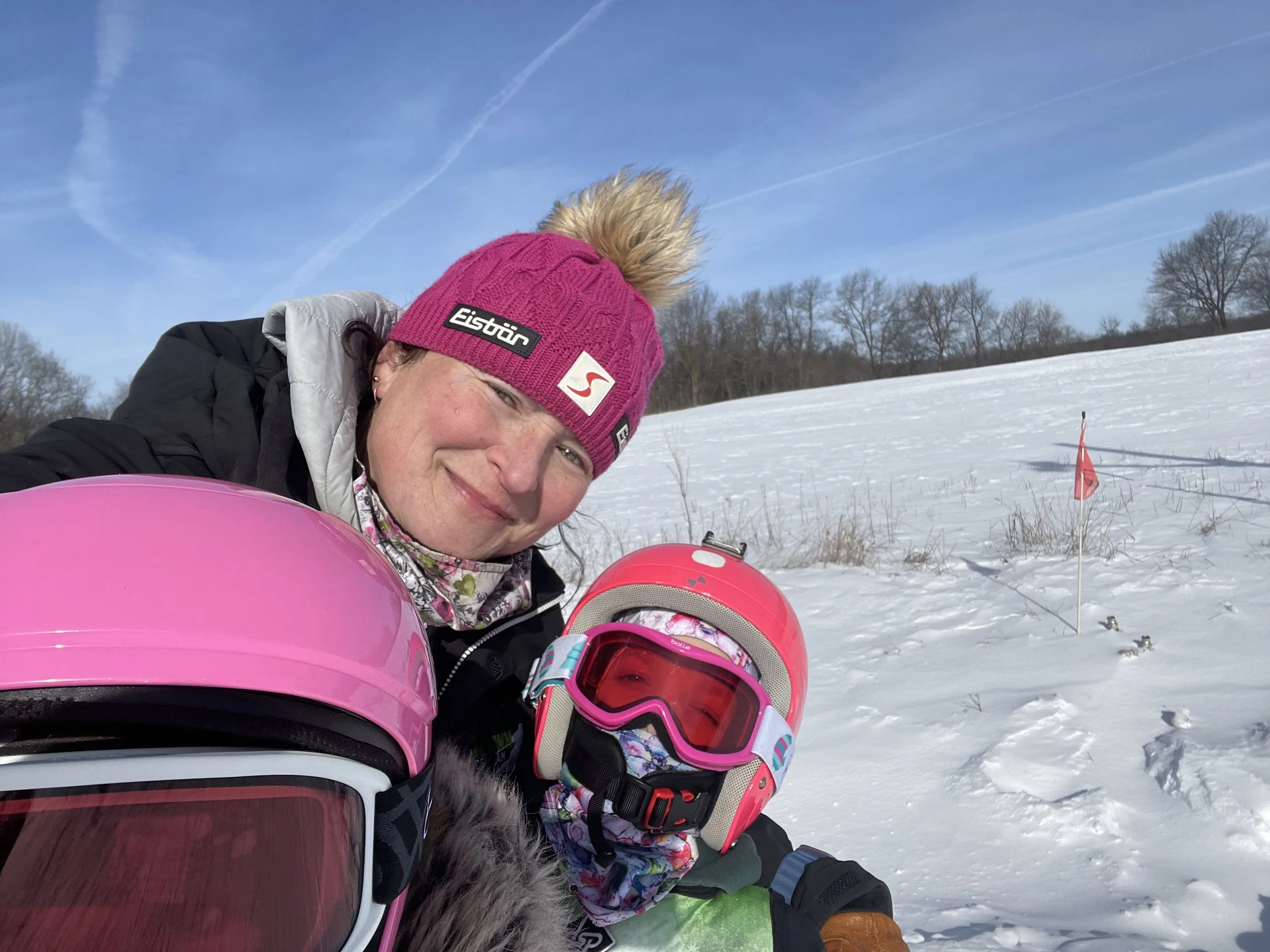
Why Topical Antioxidants Matter More as Our Skin Ages
Our skin’s antioxidant defenses change as we age—even as exposure to sun, wind, cold, heat and dry air continues. Here’s why topical antioxidants such as Vitamin E, Vitamin C and CoQ10 may become increasingly relevant to long-term skin health and Skin Longevity.
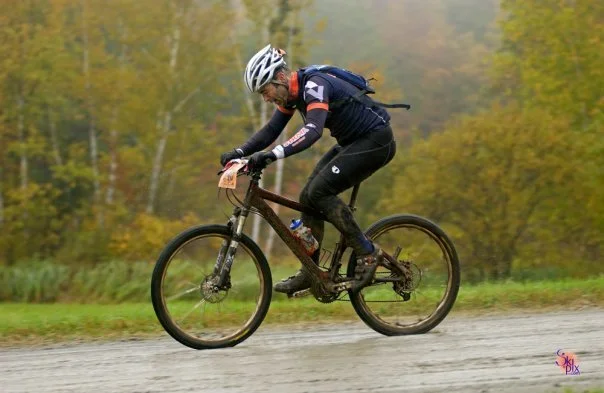
Built From Experience: Why SUI WASSER Skincare Started Outdoors, Not in a Laboratory
SUI WASSER was born from decades spent outside and built hands-on in a converted wood shop. Learn how outdoor experience, traditional botanical knowledge and modern formulation led us to a different approach to post-exposure care and Skin Longevity.
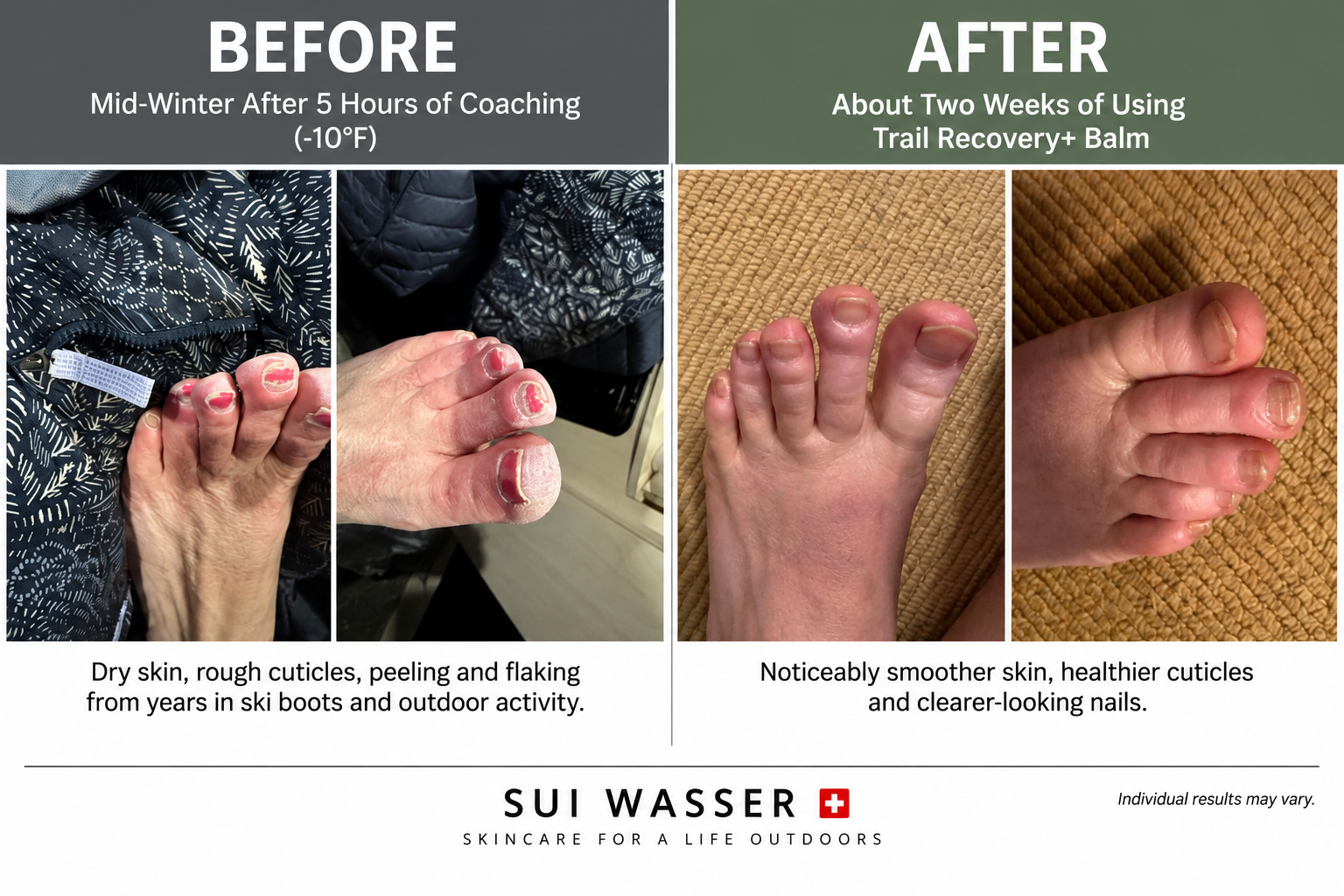
Case Study: Caring for Dry, Weather-Stressed Feet After Years in Ski Boots
After decades of ski racing, coaching, cycling and spending long days outdoors, my feet had taken a beating. This is a personal before-and-after look at what happened when I began consistently using Trail Recovery+ on my feet, toes, ankles and lower legs.
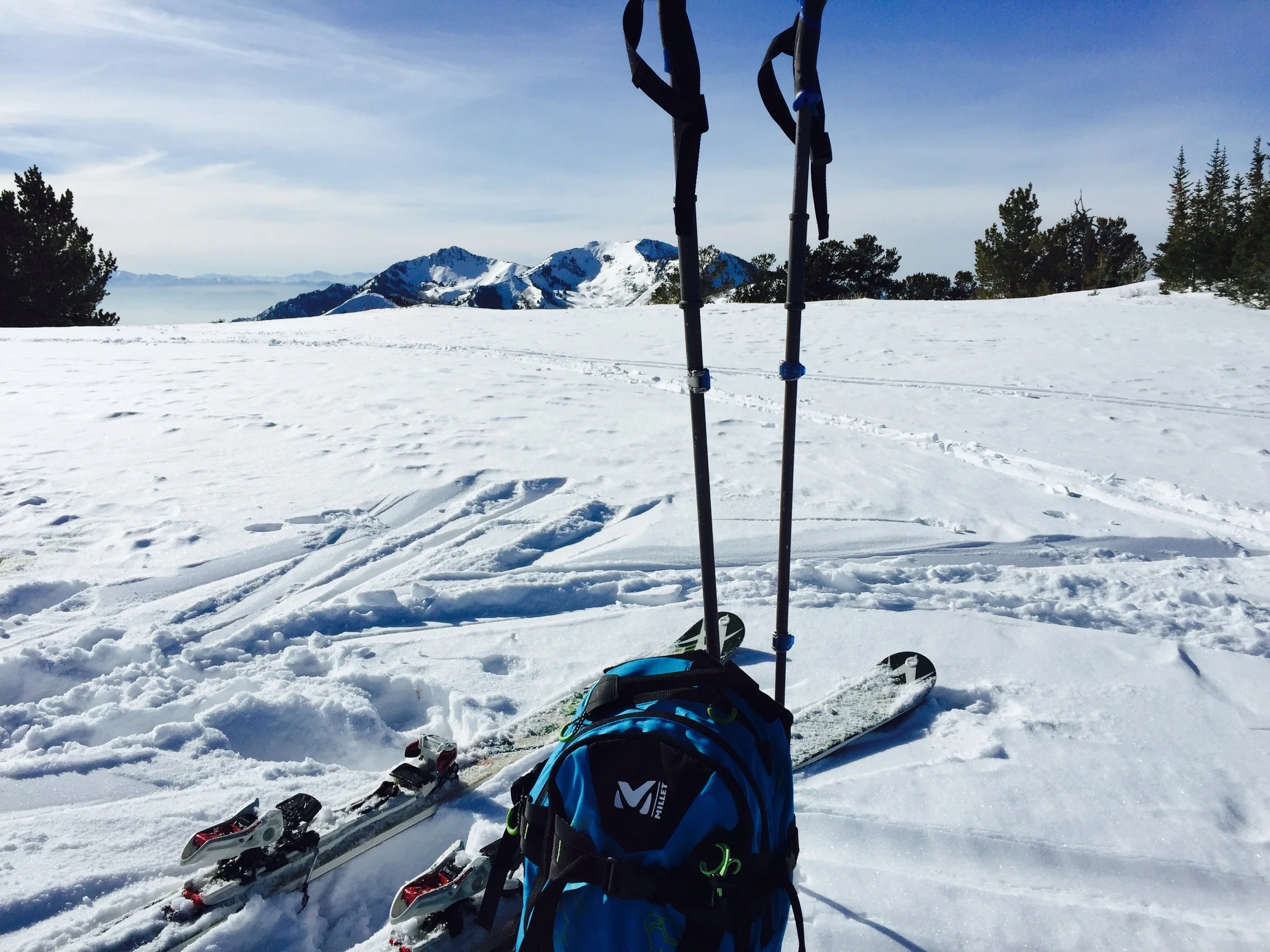
Five Balms. Five Jobs. One Skincare System.
Different days. Different conditions. Different needs. Learn how Extreme Shield, Après-Sport, Recovery+, Trail Recovery+ and Alpin-Glow work together as one skincare system built for life outdoors.
Not every outdoor day puts the same demands on your skin. Learn how the SUI WASSER system moves from pre-exposure protection to post-exposure recovery and everyday Skin Longevity—and which balm to reach for when.
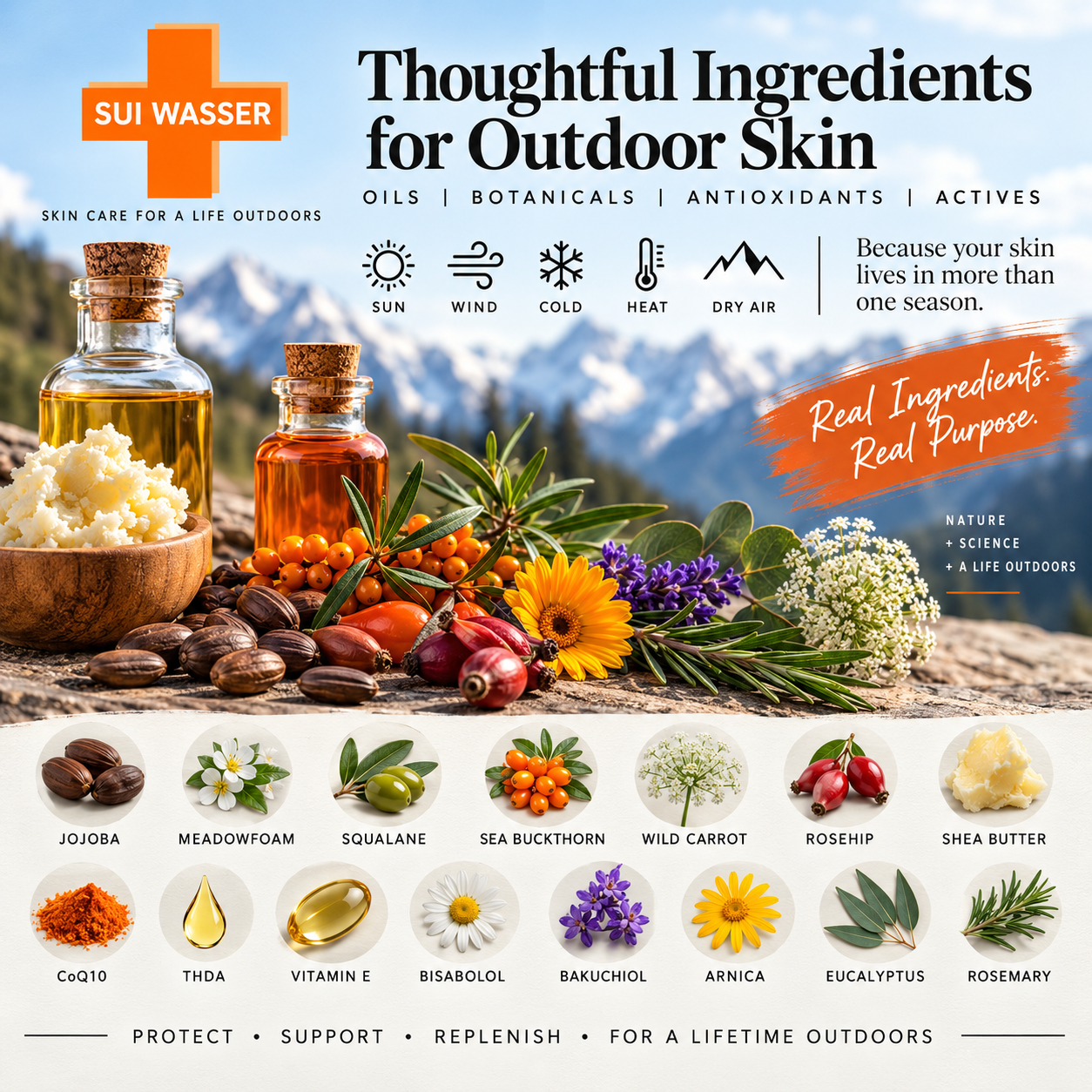
Inside SUI WASSER: The Oils, Botanicals & Actives I Build With
Why jojoba? Why meadowfoam, squalane, sea buckthorn, CoQ10, bakuchiol, arnica and eucalyptus? Take a closer look at the oils, botanicals and actives behind SUI WASSER—and how we evaluate ingredients for skin routinely exposed to sun, wind, cold, heat and dry air.
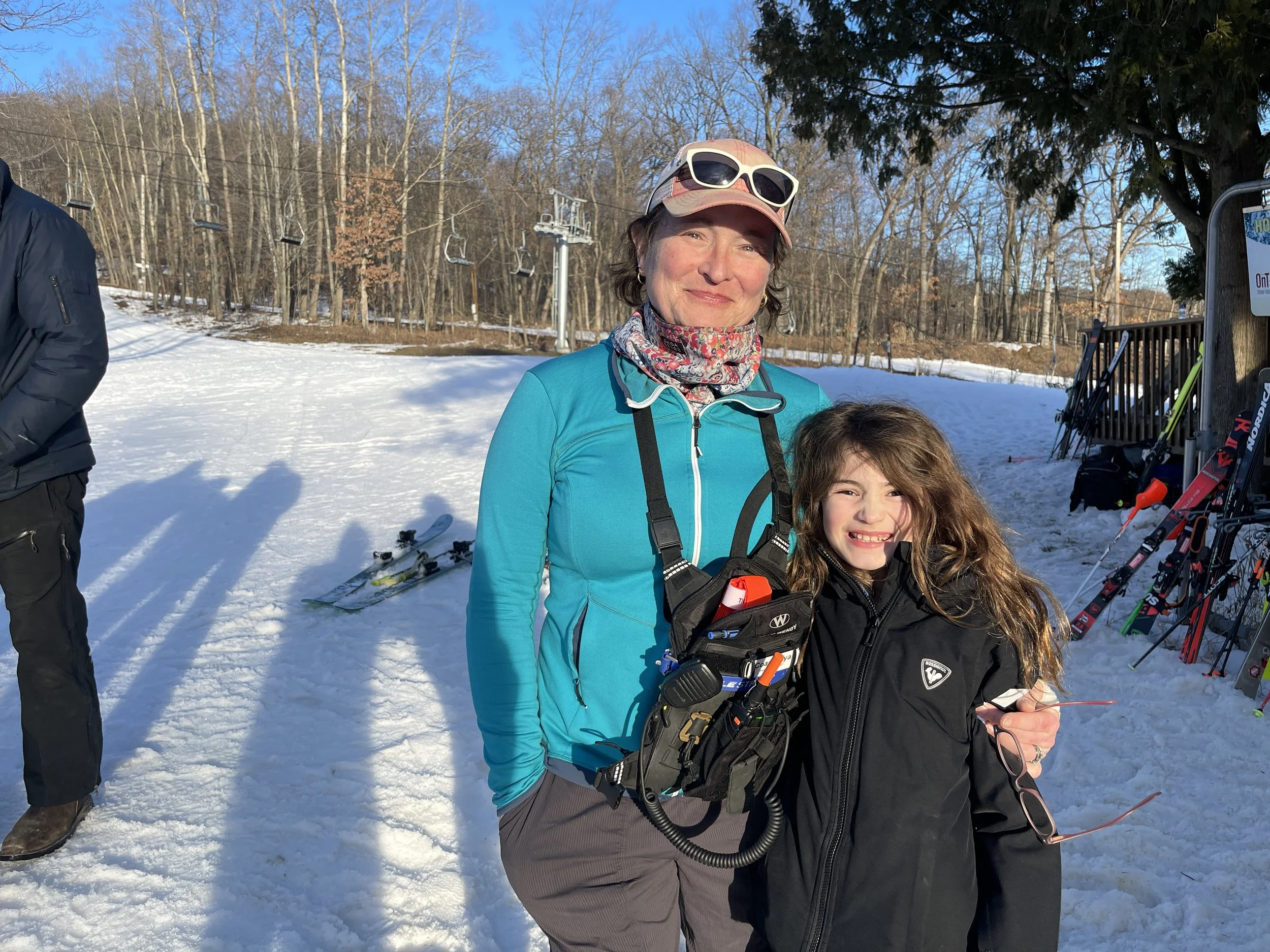
Your Skin Changed. The Lifestyle Didn’t. Did Your Skincare Change With It?
The skincare that worked at 25 may not be what our skin needs at 45, 55 or 65. After decades spent outdoors, I began noticing the difference myself—and it changed the way I thought about skincare, aging and eventually, balm.
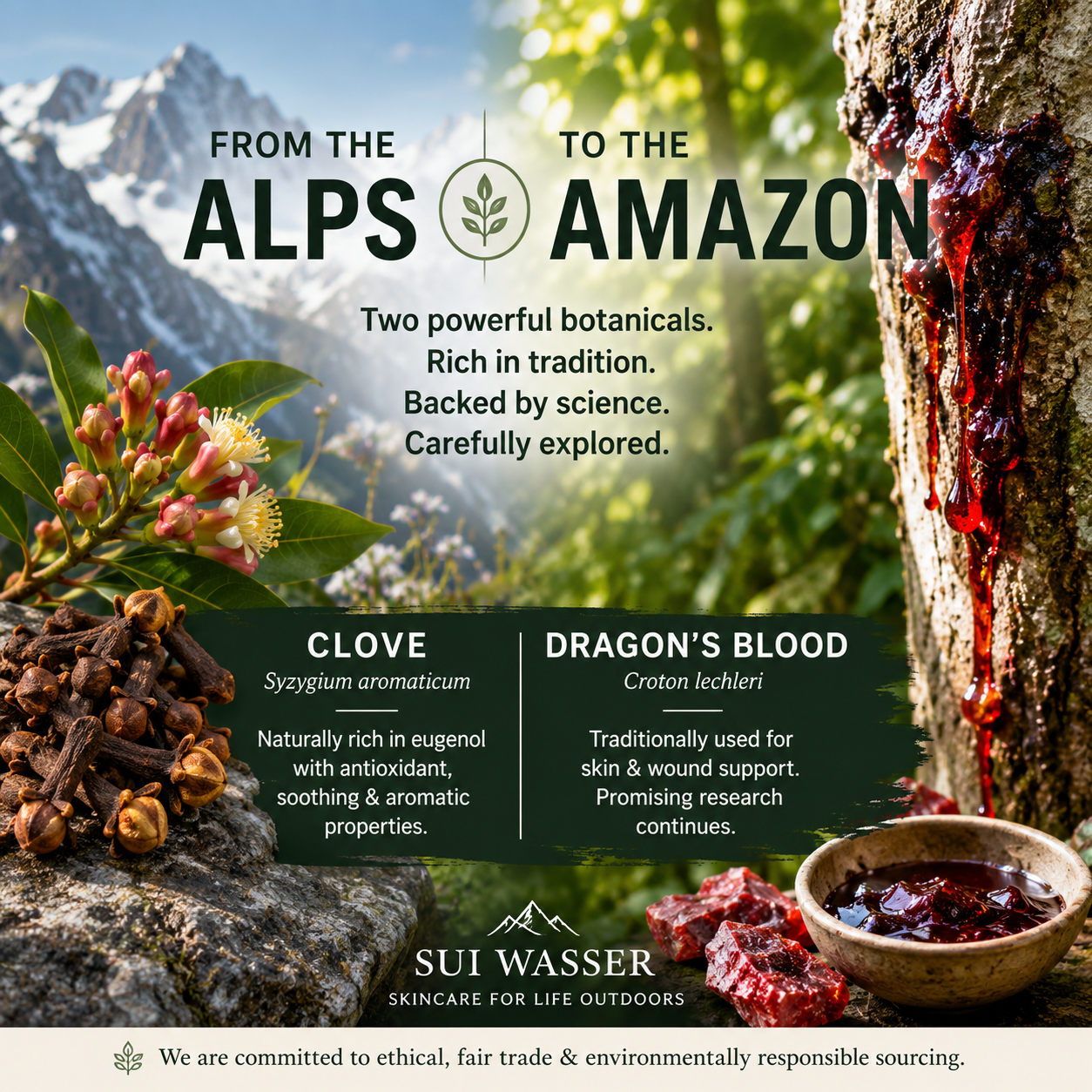
From the Alps to the Amazon: Two Botanicals We’re Exploring for Fall
What Is Dragon’s Blood (Croton lechleri)? What Makes Clove Interesting for Topical Formulation?
From Swiss herbal tradition to the Amazon rainforest, we’re exploring two remarkable botanicals for the next generation of SUI WASSER formulations. Take a closer look at clove, Dragon’s Blood (Croton lechleri), the science behind them, and why responsible sourcing matters as much as what an ingredient can do.
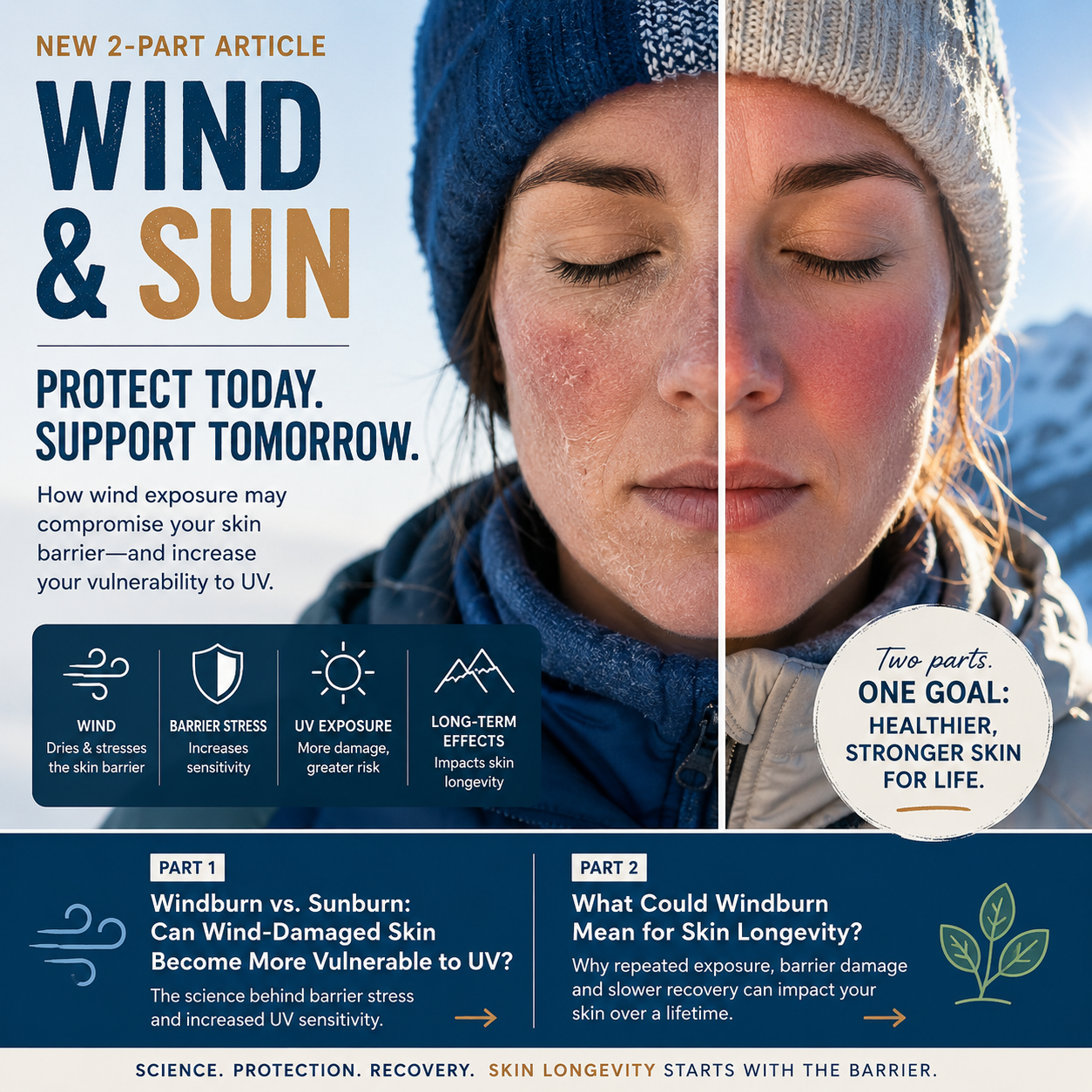
Windburn vs. Sunburn: Can Wind-Damaged Skin Become More Vulnerable to UV?
Windburn and sunburn are often talked about as separate problems, but the relationship between wind, skin-barrier damage, and ultraviolet exposure may be more closely connected than it first appears.
In this two-part article, Part One — “Windburn vs. Sunburn: Can Wind-Damaged Skin Become More Vulnerable to UV?” looks at how cold, dry, moving air can stress the skin barrier and examines research suggesting that compromised skin may respond more strongly to ultraviolet radiation.
Part Two — “What Could Windburn Mean for Skin Longevity?” takes the discussion further, exploring what repeated cycles of wind exposure, barrier disruption, UV stress, and recovery may mean for skin over years and decades.
Together, the two parts look beyond windburn as a temporary outdoor annoyance and consider a larger question: how might protecting and maintaining the skin barrier contribute to healthier, more resilient skin over a lifetime?
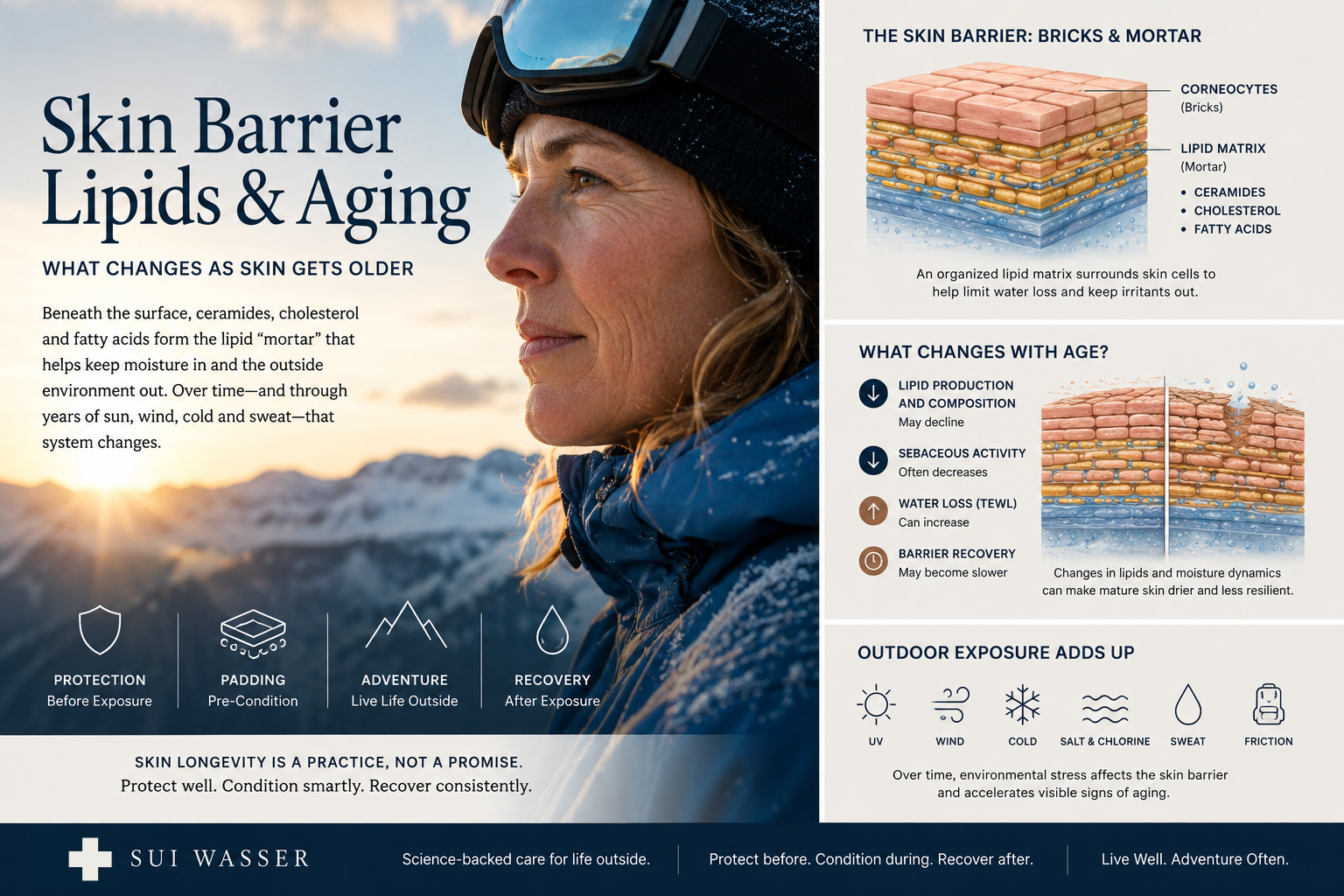
Skin Barrier Lipids & Aging: What Changes as Skin Gets Older
What happens to the skin barrier as we get older? Ceramides, cholesterol and fatty acids help regulate moisture loss and protect the skin’s outer surface, but barrier biology changes with age. We explore the science of skin barrier lipids, environmental exposure, moisture loss and what it all means for Skin Longevity—especially for people who spend a lot of life outdoors.
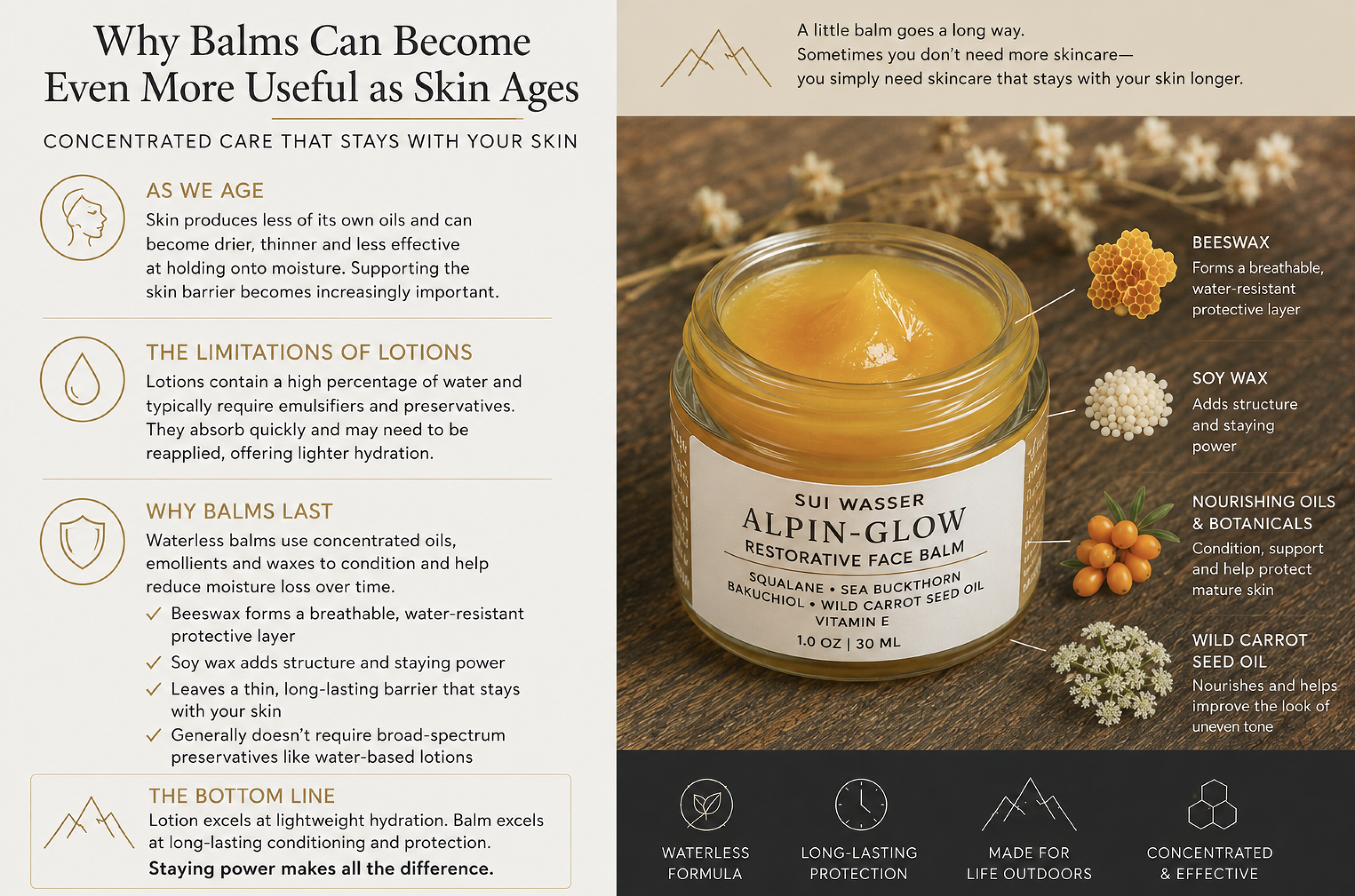
PRO TIP: Why Balms Can Become Even More Useful as Skin Ages?
Why Balms Can Become More Useful as Skin Ages by SUI WASSER speaks to our commitment to Skin Longevity, supporting the skins needs beyond youth.
As skin ages, it can become drier and less effective at holding onto moisture. Learn why concentrated, waterless balms can provide longer-lasting conditioning and barrier support—and why beeswax, plant waxes, oils and emollients make balm especially useful for skin exposed to the outdoors.
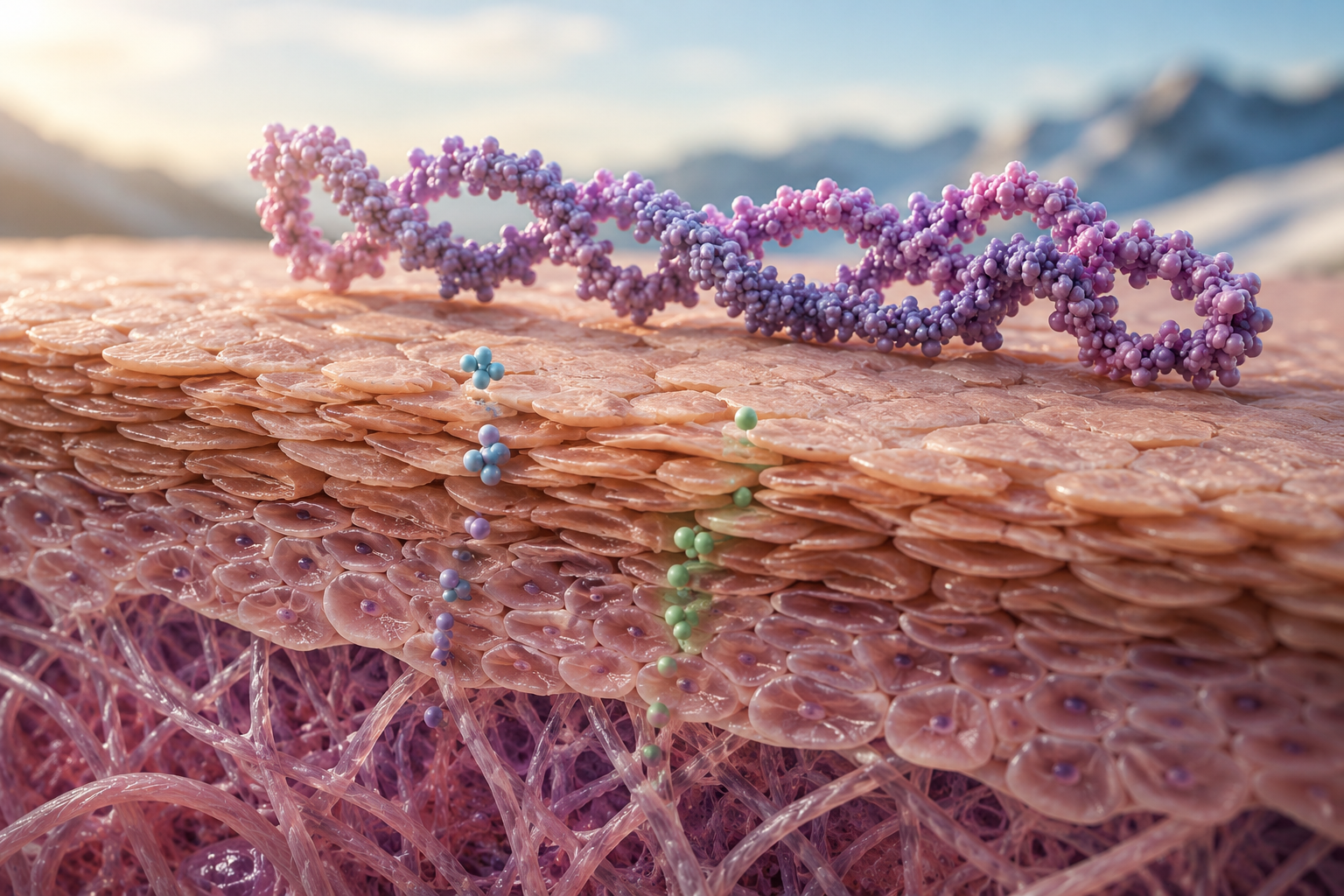
Pro Tip: What you need to know about Collagen before you spend your money.
Spending serious money on collagen-rich creams? Topical collagen can help moisturize and condition the skin, but that doesn’t mean it replaces collagen lost within the dermis. Learn why molecular size, the skin barrier and the 500-Dalton rule help explain what collagen skincare can—and can’t—do.