What Does “Post-Exposure Recovery” Actually Mean for Your Skin?
One sunny day outdoors isn’t the whole problem. It’s what happens when those days accumulate.
A morning run, an afternoon on the water, eight hours on the mountain, another weekend outdoors—repeated over months, seasons and decades. UV exposure accumulates over a lifetime, contributing to photoaging, increased skin-cancer risk, and molecular changes within the skin, including damage to DNA and changes to collagen and other components of the extracellular matrix.
And importantly, you don’t have to get sunburned for exposure to matter. Sunburn is an obvious sign that the skin has received too much UV radiation, but the absence of a burn doesn’t mean that nothing happened beneath the surface. For people who spend a significant part of their lives outdoors, that’s an important distinction. The question isn’t simply how your skin feels at the end of one day. It’s how we care for it through hundreds or thousands of days outdoors.
That’s where the idea of Skin Longevity becomes important. We aren’t interested in keeping people out of the sun or away from the activities they love. Quite the opposite. We want people to keep skiing, sailing, running, hiking, riding, gardening and working outdoors for as long as they possibly can.
That means protecting skin before and during exposure remains essential. But it also means asking a question that has received far less attention: After the exposure has occurred, what can we do to support the skin as it responds and recovers?
That question is at the heart of post-exposure skincare—and at the heart of the work we’re doing at SUI WASSER.
What Is Post-Exposure Recovery?
After a long ride, a day in the mountains, or an afternoon on the water, you already know how to recover. You drink water. You eat. You stretch tired muscles. You rest. You dry out your gear and get ready to do it again.
But what about your skin?
It was out there all day too.
Post-exposure recovery increasingly means caring for the part of you that faced the elements—going beyond Aloe—replenishing moisture and lipids lost to the environment, supporting the skin barrier, and providing antioxidant-rich ingredients that can help support the skin’s defenses against oxidative stress.
That last part is important because not everything that happens to our skin outdoors is something we can see or feel. UV radiation and other environmental stressors can increase the production of reactive oxygen species, contribute to inflammation and oxidative stress, and affect cellular components including lipids, proteins and DNA. Meanwhile, wind, cold, heat, dry air, salt water, chlorine and sweat can challenge the skin barrier and contribute to moisture loss and irritation.
When environmental exposure depletes and disrupts the skin barrier, it can leave skin more vulnerable to subsequent environmental stress. Research increasingly suggests that barrier integrity itself plays an important role in the skin’s response to UV exposure, linking barrier health with oxidative stress, inflammation and other downstream effects.
Post-exposure recovery is about addressing both sides of that equation: replenishing the barrier we can feel while mitigating against environmental stress we can’t see.
Sunscreen, protective clothing, hats and shade remain the first line of defense against excessive UV exposure. Nothing in a recovery routine replaces them.
For people who ski, run, hike, sail, ride, garden, work outdoors or train through the seasons, protection isn’t the entire conversation. With today’s balms it is possible to mitigate damage caused by the sun and the elements—keeping your skin healthy and getting the most mileage out of it.
What post-exposure recovery means for your skin
Post-exposure recovery is not a claim that a balm can undo a day in the sun. It cannot erase years of accumulated UV exposure, replace sunscreen, or take over the sophisticated repair processes your cells manage on their own.
But that doesn’t mean there’s nothing meaningful we can do after exposure.
Quite the opposite. Post-exposure recovery is about supporting the environment in which skin carries out its own recovery processes after a demanding day outdoors. And that means thinking beyond simply cooling a sunburn or making dry skin feel better.
Hours outdoors can challenge the skin on multiple fronts at once. Wind, cold, heat, low humidity, salt water, chlorine and repeated cleansing can strip moisture and surface lipids and compromise the skin barrier. UV radiation can simultaneously generate reactive oxygen species (ROS), contribute to oxidative stress and inflammatory signaling, and damage cellular components including lipids, proteins and DNA causing long-term damage.
Those aren’t two unrelated problems.
The condition of the skin barrier matters. An intact barrier helps the skin retain water and maintain the environment necessary for normal function, while emerging research also points to connections between barrier integrity and the skin’s response to UV-induced stress.
That’s why we believe post-exposure recovery should address both sides of the equation.
First, replenish what exposure has taken away. An emollient-rich balm can help replace surface lipids, reduce moisture loss, soften weather-stressed skin and support restoration of the physical barrier.
Second, provide antioxidant support. UV exposure generates reactive oxygen species, and antioxidants can interact with reactive species through several mechanisms. This is why antioxidant compounds continue to receive significant scientific attention in research examining complementary approaches to photoprotection and environmental skin stress.
Put those two ideas together and the role of a post-exposure balm becomes much more interesting. We’re not simply trying to make depleted skin feel better. We’re creating a more supportive environment for recovery: replenish the barrier, reduce moisture loss, deliver carefully selected antioxidant-rich ingredients to the skin, and support the skin while its own defense and repair systems do the work only living tissue can do.
That’s the thinking behind SUI WASSER’s balms. A balm is particularly well suited to this role because its concentrated, largely lipid-based format can remain on the skin rather than disappearing quickly, helping reduce transepidermal water loss while keeping lipid-soluble ingredients in contact with the skin. For someone coming off the mountain, getting out of the boat, finishing a long ride, or wrapping up a day working outdoors, it’s also remarkably simple:
Apply it. Leave it on. Let your skin get to work. And that’s an important part of the idea. Post-exposure recovery shouldn’t require a complicated ten-step skincare routine. Outdoor people have better things to do. What we want is a practical recovery step that fits naturally into an outdoor life.
Protect before and during exposure. Then, when the day is done: Replenish. Support. Recover.
That’s Post-Exposure Recovery.
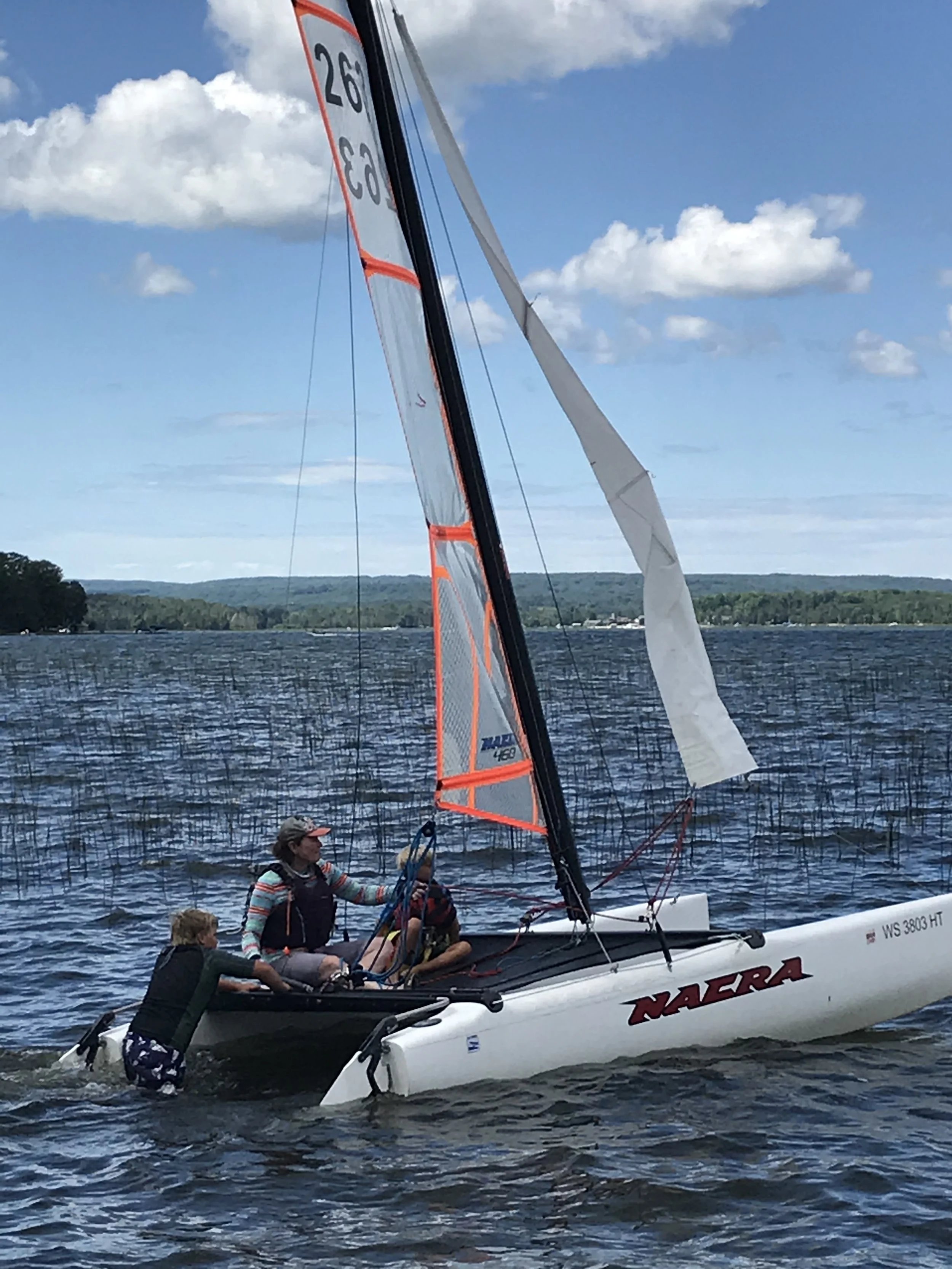
SUI WASSER founder Mya Schaefer teaching sailing—another day outdoors, another day of exposure. With a family history of skin cancer and a lifetime spent outdoors, Mya’s search for better ways to protect the skin and mitigate the effects of UV exposure ultimately became part of the inspiration behind SUI WASSER. We look to nature for answers—and let science guide the way.
FURTHER READING — THE SCIENCE BEHIND POST-EXPOSURE RECOVERY
For readers interested in exploring the science behind environmental skin stress, barrier recovery, oxidative stress, and post-exposure care, the following research has helped inform our thinking at SUI WASSER.
Delayed UV Damage
Premi S, Wallisch S, Mano CM, et al. Chemiexcitation of Melanin Derivatives Induces DNA Photoproducts Long After UV Exposure. Science. 2015;347(6224):842–847.
This landmark research demonstrated that certain UV-induced DNA photoproducts can continue to form for hours after UV exposure has ended. The findings helped establish the post-exposure period as an important area for continued research.
READ THE RESEARCH:
https://pubmed.ncbi.nlm.nih.gov/25700512/
Biological Photoprotection
Brown A, Passeron T, Gilaberte Y, et al. Biological Photoprotection: A Review of its Mechanisms, Evidence, and Clinical Implications. Dermatology and Therapy. 2026;16(7):3633–3648.
This review examines biological approaches that may complement traditional photoprotection, including antioxidant defense, DNA repair, inflammatory pathways, pigmentation responses, and other mechanisms involved in the skin’s response to solar and environmental stressors. This research is helping inform SUI WASSER’s continuing exploration of post-exposure skincare and Skin Longevity.
READ THE RESEARCH:
https://pmc.ncbi.nlm.nih.gov/articles/PMC13280310/
Skin Barrier Function and Environmental Exposure
Engebretsen KA, Johansen JD, Kezic S, Linneberg A, Thyssen JP. The Effect of Environmental Humidity and Temperature on Skin Barrier Function and Dermatitis. Journal of the European Academy of Dermatology and Venereology. 2016.
This review examines how environmental conditions affect skin barrier function. The authors found that low humidity and low temperatures can decrease barrier function and increase the skin’s susceptibility to mechanical stress—particularly relevant to people spending extended periods outdoors in cold, dry environments.
READ THE RESEARCH:
https://pubmed.ncbi.nlm.nih.gov/26449379/
Skin Barrier Function and UV Exposure
Biniek K, Levi K, Dauskardt RH. The Impact of Ultraviolet Radiation on Barrier Function in Human Skin: Molecular Mechanisms and Topical Therapeutics.
Research also indicates that ultraviolet radiation and epidermal barrier function are interconnected. This review examines the mechanisms involved in UV-induced barrier dysfunction and the potential role of topical approaches in supporting the skin barrier.
READ THE RESEARCH:
https://pubmed.ncbi.nlm.nih.gov/29110595/
A NOTE FROM SUI WASSER
Post-exposure skincare does not replace sunscreen, protective clothing, shade, or other established forms of sun protection. Nor can a topical balm simply “undo” years of UV exposure. Instead, our interest is in a different set of question:
1. What can we do to support the skin while its own protective and recovery systems do their work?
2. What ingredients can best support the skin after environmental exposure?
3. How can we mitigate damage post-exposure?
4. How can we support the skin’s health, resilience, and function over a lifetime of repeated environmental exposure?
These question sit at the heart of our approach to Post-Exposure Recovery and Skin Longevity.
