Research & Science Behind SUI Wasser
Introduction
On this page, you will find the orginial science that influenced us to start SUI WASSER.
The page summarizes the research, strategy, and philosophy we’ve poured into our skincare system.
Why Post-Exposure Skin Care Matters…
Outdoor exposure doesn’t end when you come inside.
Sun, wind, cold temperatures, and dry air place significant stress on skin — especially in alpine and high-exposure environments. While much attention is placed on protection during time outdoors, research shows that the biological effects of environmental exposure continue well after exposure has ended.
Ultraviolet radiation initiates inflammatory responses in the skin that persist for hours or longer after sun exposure. At the same time, wind and cold dry air compromise the skin’s natural barrier, increasing moisture loss and leaving skin more vulnerable, tight, and uncomfortable. Together, these factors can continue to stress skin even after activity stops and layers come off.
After exposure, the skin is often:
Dehydrated due to increased transepidermal water loss
Experiencing ongoing inflammation and oxidative stress
Less effective at maintaining its natural barrier function
This post-exposure period is a critical window for your skin. The objective for SUI WASSER is to create mitigation solutions to help comfort stressed skin during the post-exposure period, and to help mitigate damage to DNA by reducing oxidative stress.
Après skin care is designed to support skin during this phase — after the sun, wind, and cold have already done their work.
By focusing on barrier support, moisture retention, and antioxidant replenishment, post-exposure care helps calm stressed skin and supports its natural recovery processes.
In alpine environments, where reflective surfaces, low humidity, and wind amplify exposure, this post-period becomes even more important. The skin may feel fine when you first come in out of cold environments or while swimming only to become enflamed, dry, tight, or irritated on the drive home, later in the evening, or before bed. By expediting care, immediately after exposure, you help reduce this delayed discomfort and support overall skin resilience and recovery.
Après skin care is not about blocking exposure—it’s about responding thoughtfully once exposure has occurred.
We approach outdoor skincare as a system rather than a single product or intervention: protect where possible, mitigate the effects of repeated environmental exposure, support the skin barrier and its natural biological defenses, and provide meaningful post-exposure care.
Our focus on Skin Longevity grew from the belief that people who spend decades in the outdoors need more than an increasingly sophisticated sunscreen—they need a long-term strategy for supporting skin subjected to repeated sun, wind, cold, heat, dry air, altitude, salt, sweat, and other environmental stresses.
To learn more about the science behind SUI WASSER we’ve shared below links to several of the original research papers that influenced the development of SUI WASSER’s skincare system. Or, click here to view SUI WASSER’s skincare system and products.
Skin Exposome & Extreme Exposure
The skin exposome is the collection of environmental and lifestyle exposures that influence our skin throughout life.
Rather than examining sunlight in isolation, exposome research considers factors such as ultraviolet radiation, visible light, air pollution, climate, temperature, humidity, lifestyle, and other environmental influences—and how those exposures interact over time.
Why we’re interested: This may be one of the most important concepts in Skin Longevity. In extreme enrivorments, exposure is elevated and/or prolonged.
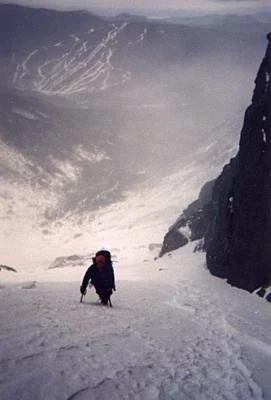
Our skin doesn’t encounter one environmental stress at a time. Someone skiing at altitude may simultaneously encounter increased UV radiation, reflected radiation, extreme cold, high-winds, very low humidity, and temperature extremes.
For us, that’s the real world.
Post-Exposure Mitigation
● Inflammatory molecules associated with UV radiation (open access). What Happens After UV Exposure? Biological Photoprotection.
Link: https://link.springer.com/article/10.1007/s13555-026-01805-y?
Biological Photoprotection: A Review of its Mechanisms, Evidence, and Clinical Implications
Brown et al. · Dermatology and Therapy · 2026
Purpose: This paper matters to SUI WASSER because it provides a scientific framework for looking beyond UV filtering to understand how the skin biologically responds to environmental exposure—and how those defense, repair, and recovery processes may inform our approach to Skin Longevity, (a.k.a. Long-Term Skin Health).
Inflammatory Responses to UV Exposure
● Inflammatory molecules associated with UV radiation (open access)
Link: https://www.ncbi.nlm.nih.gov/pmc/articles/PMC8069861/
Purpose: Overview of UV-induced inflammatory mediators — useful for a scientific rationale on post-exposure skin stress.
● Ultraviolet light-induced injury: immunological and inflammatory effects
Link: https://onlinelibrary.wiley.com/doi/10.1046/j.1440-1711.2001.01047.x
Purpose: Reviews how UV triggers inflammation that persists beyond exposure.
● Mediators of inflammation involved in UVB erythema
Link: https://www.sciencedirect.com/science/article/abs/pii/S0923181199000705?via%3Dihub
Purpose: Details the molecular mediators behind skin redness and ongoing inflammatory change after UVB.
Barrier Disruption + Transepidermal Water Loss (TEWL)
● Solar UV radiation reduces barrier function of skin (open access)
Link: https://www.ncbi.nlm.nih.gov/pmc/articles/PMC3479513/
Purpose: Shows how UV impairs stratum corneum cohesion and barrier properties — evidence for post-exposure dysfunction.
● Impact of Ultraviolet Radiation on Barrier Function (review)
Link: https://pubmed.ncbi.nlm.nih.gov/29110595/
Purpose: Summary of research showing how UV impacts the barrier and increases TEWL.
● UVB-Induced Alterations in Barrier Function (TEWL study)
Link: https://www.sciencedirect.com/science/article/abs/pii/S0022202X15530224
Purpose: Empirical study of UVB → barrier change → TEWL.
Moisturization and Barrier Repair Science
● The skin barrier and moisturization: function, disruption, and repair
Link: https://www.karger.com/Article/FullText/863006
Purpose: Overview of barrier/TEWL physiology and how moisturization supports skin recovery.
● Revitalizing the skin: role of barrier repair
Link: https://onlinelibrary.wiley.com/doi/10.1111/jocd.16171
Purpose: Dermatologic view on barrier repair cosmetics and mechanisms.
● Clinical study (moisture + barrier improvements)
Link: https://www.mdpi.com/2077-0383/12/18/6078
Purpose: Evidence of skin moisturization and barrier function improvements from topical formulations.
Antioxidants / Vitamin E + UV Effects
● Vitamin E in dermatology (open access)
Link: https://www.ncbi.nlm.nih.gov/pmc/articles/PMC4976416/
Purpose: Comprehensive review of tocopherol use and antioxidant effects in dermatologic settings.
● Topical tocopherol & UV radiation research
Link: https://www.sciencedirect.com/science/article/abs/pii/S0891584996003462
Purpose: Shows how UV reduces skin antioxidant stores and how topical antioxidants can mitigate this.
Link: https://www.jaad.org/article/S0190-9622(03)00781-3/abstract
Purpose: Demonstrates antioxidant combinations in resisting UV-induced oxidative change.