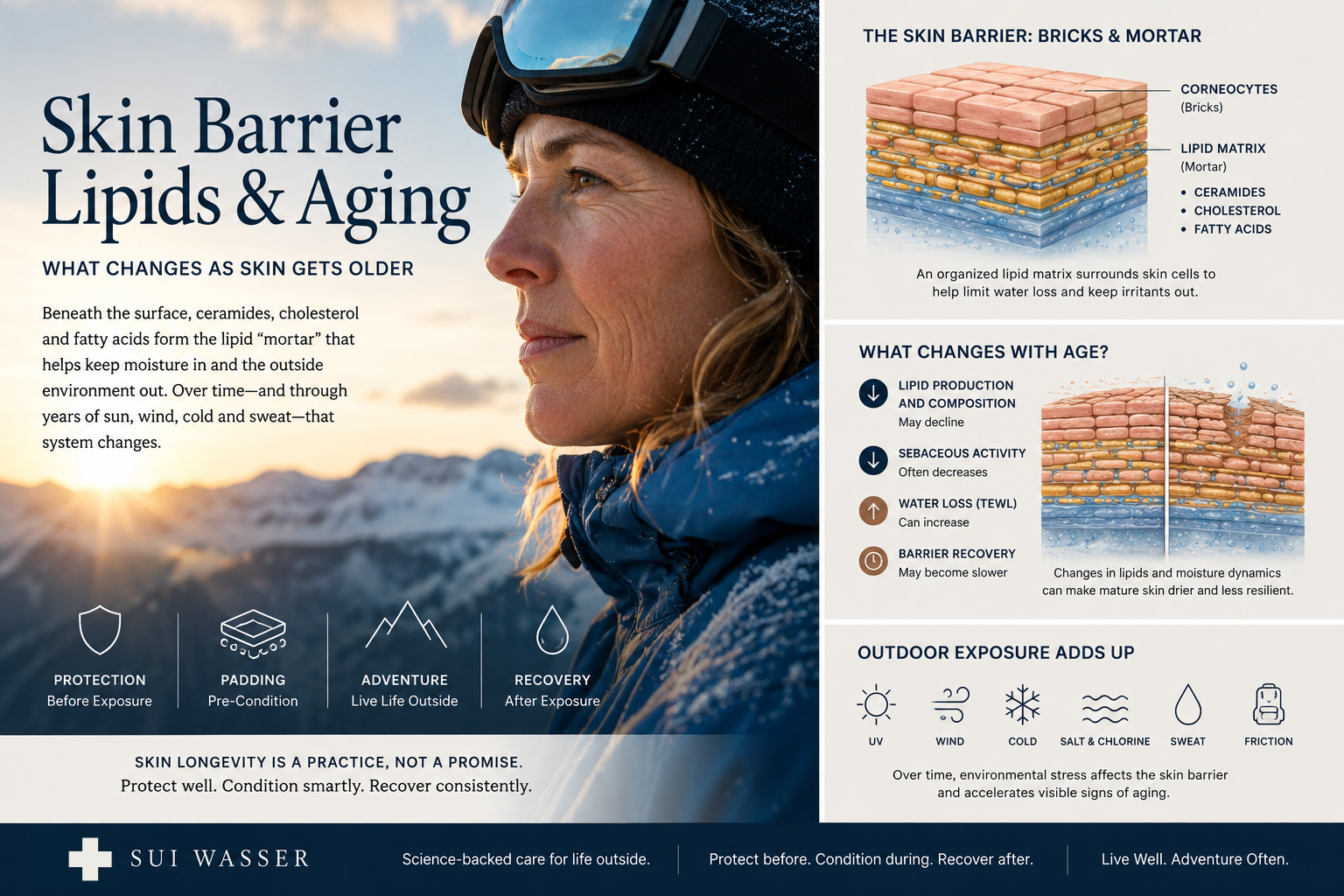
Skin Barrier Lipids & Aging: What Changes as Skin Gets Older
What happens to the skin barrier as we get older? Ceramides, cholesterol and fatty acids help regulate moisture loss and protect the skin’s outer surface, but barrier biology changes with age. We explore the science of skin barrier lipids, environmental exposure, moisture loss and what it all means for Skin Longevity—especially for people who spend a lot of life outdoors.
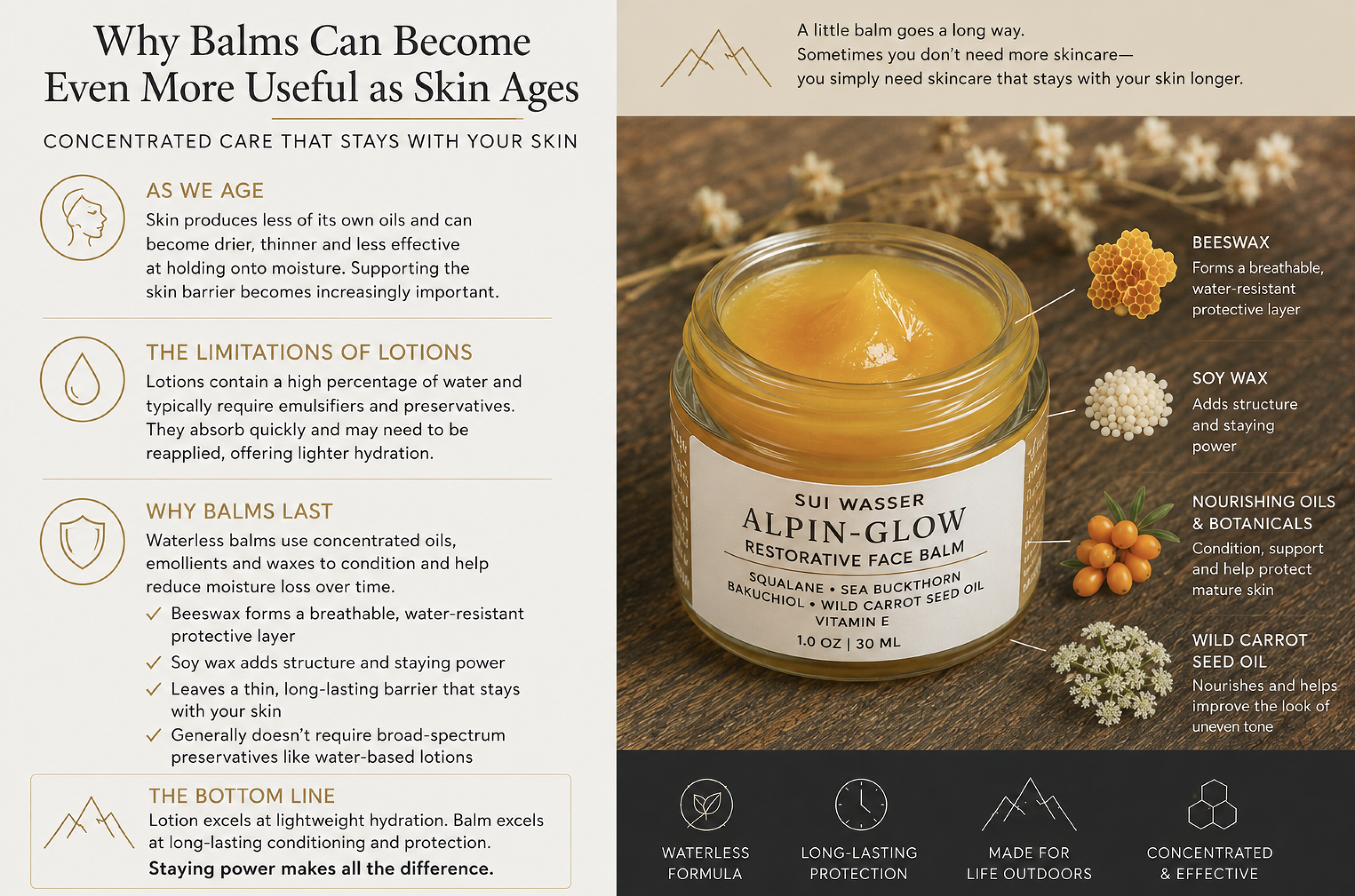
PRO TIP: Why Balms Can Become Even More Useful as Skin Ages?
Why Balms Can Become More Useful as Skin Ages by SUI WASSER speaks to our commitment to Skin Longevity, supporting the skins needs beyond youth.
As skin ages, it can become drier and less effective at holding onto moisture. Learn why concentrated, waterless balms can provide longer-lasting conditioning and barrier support—and why beeswax, plant waxes, oils and emollients make balm especially useful for skin exposed to the outdoors.
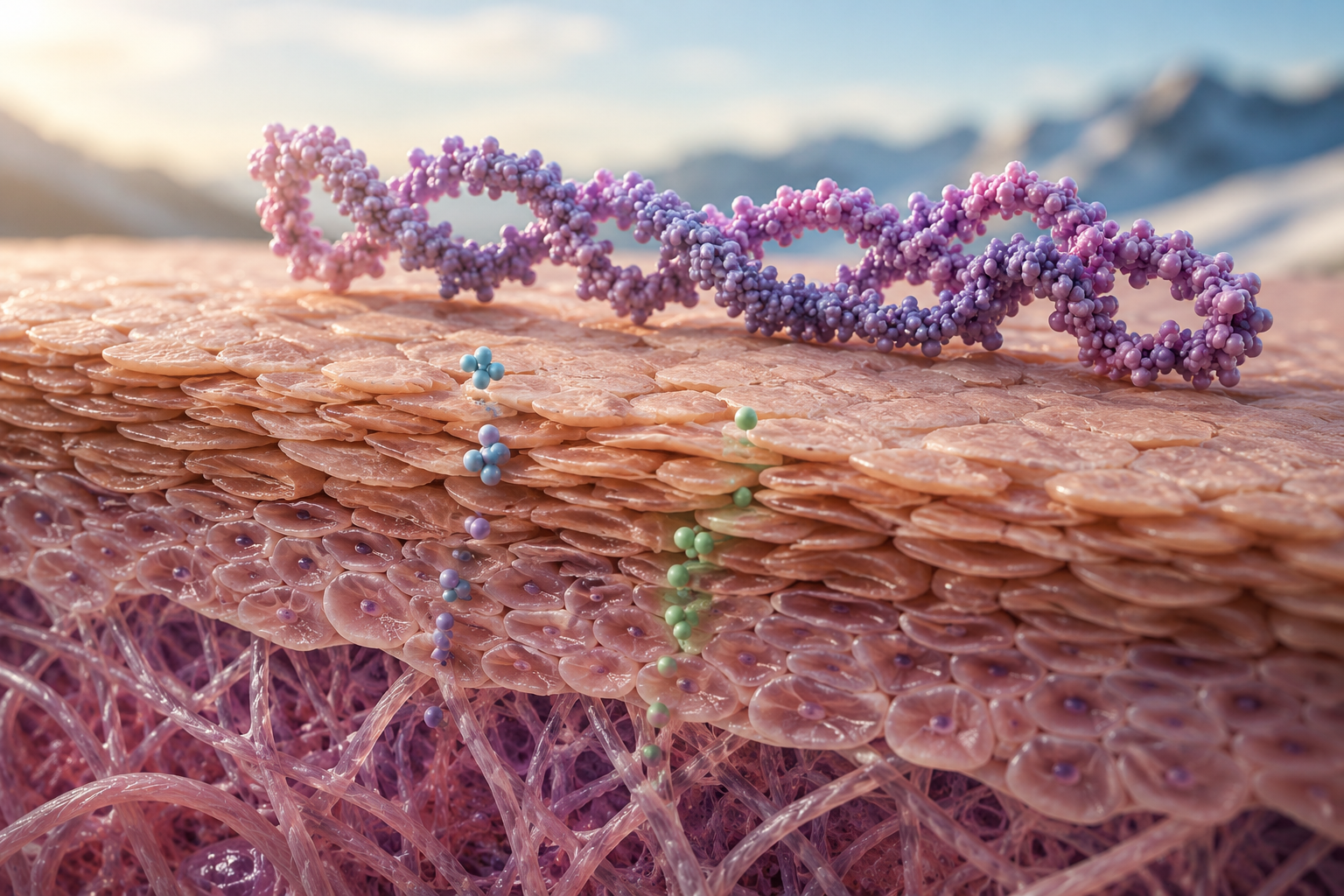
Pro Tip: What you need to know about Collagen before you spend your money.
Spending serious money on collagen-rich creams? Topical collagen can help moisturize and condition the skin, but that doesn’t mean it replaces collagen lost within the dermis. Learn why molecular size, the skin barrier and the 500-Dalton rule help explain what collagen skincare can—and can’t—do.
Why Your Skin Barrier Changes as You Age — and Why Outdoor Exposure Matters
As we age, our skin barrier changes—and decades of exposure to sun, wind, cold and dry air can add another layer of stress. Learn why barrier health, hydration and environmental protection are becoming central to the emerging idea of skin longevity.