
Trail Recovery+ Balm: Why I Built It This Way
Arnica, Meadowfoam Seed Oil, Eucalyptus, Rosemary—and the thinking behind a balm built for people who keep moving.
Trail Recovery+ began with a fairly straightforward question: What do I need every day to keep my body going after spending a lifetime racking up a list of devastating injuries?
Injuries from Alpine Ski Racing
The first serious injury I experienced alpine ski racing happened when I was 17. When crashed off a trail and hit a light pole, it sounded like a shotgun going off. My body folded over as I slid head-first past the pole. As my speed dissipated, my lower right leg buckled and landed on top of me.
When I sat up, my chin dug into the back of my knee. My right calf muscle was resting against my left cheek, and the top of my ski boot was catching on my ear.
My femur had snapped in two.
That realization hit me immediately. In a burst of adrenaline, I grabbed my leg, sat up, and put it back where it belonged…approximately. Then I laid back down, crawled backwards a bit to position my head down hill, and waited for ski patrol.
That was my introduction to the extreme risks associated with the sport I loved: alpine ski racing.
I would go on to break many more bones and suffer many more injuries, including a high-speed downhill training crash at approximately 70 mph. Each time, I put in the rehab, and fought my way back. By the time I left ski racing, I had undergone 11 major operations. I was 24.
And yet, I never really left the sport.
Today, I still love skiing. I volunteer as a coach and help run ski racing at our local hill here in Dubuque, Iowa—Sundown Mountain—home of Lange ski boots. I cycle. I work outdoors. And I continue to pursue a plethora of outdoor sports and activities.
At 56, however, I carry those old injuries with me.
I have a plate on my tibia held in place by seven screws, four of which have sheared off. That area, in particular, has bothered me for years and can become extremely uncomfortable during the winter. For a long time, my response was Advil and Tylenol. On a half-dozen occasions, the pain and inflammation became significant enough that I turned to my Doctor who prescribed prednisone.
I knew about Arnica and had tried Arnica products, but I could never find one that was consistently effective enough to make part of my daily routine.
That became part of the reason I started formulating my own.
I’m sharing this story because I think it is important for you to understand that I am not out to create just another muscle rub.
“Need” Changes the Way You Approach Formulation
I use the products I’ve developed every day. In fact, I rely on the products I formulate as part of the routine that allows me to continue doing the things I love while reducing how often I reach for oral pain relievers.
Trail Recovery+ Balm contains a very high concentration of Arnica, but Arnica alone was never the answer I was looking for. Through extensive research—and a great deal of trial and error—I came to believe that one reason so many products had disappointed me was what I now call the All-Star Ingredient Problem.
Marketing departments tend to build products around one celebrated ingredient and expect it to do everything. But the body is far more complicated than that. Skin, connective tissue and the biological systems beneath them operate through networks of lipids, antioxidants, signaling compounds and other interacting processes. I became much more interested in finding ingredients that could complement one another than in simply adding more of a single “hero” ingredient.
That understanding changed the way I formulated SUI WASSER’s Balms, including Trail Recovery+.
Instead of asking, What is the strongest ingredient I can put in this jar? I began asking, What combination of ingredients makes sense together, and what role does each one play?
I wanted a more holistic, multifunctional approach. I wanted products built around the lives we actually lead. And I never want to stop looking for better ingredients, better combinations and better ways of supporting bodies that we fully intend to keep using.
That thinking drove me to formulate Trail Recovery+ (TR).
TR is built around several keystone botanical ingredients with very different histories, chemistry and purposes: Arnica, Meadowfoam Seed Oil, Eucalyptus, Rosemary and Sea Buckthorn Berry Oil.
Around those ingredients, I built a broader lipid and antioxidant system using jojoba, high-oleic sunflower oil, squalane, Vitamin E, CoQ10, bisabolol and other ingredients selected to improve the way the balm’s performance, remains on the skin and conditions it.
The result is Trail Recovery+.
And there is a reason virtually everything in the jar is there. Below I’ve listed out the key ingredients I’ve brought together in TR+, describing their role and function.
Arnica montana: Where Trail Recovery+ Really Begins
If Trail Recovery+ has a botanical anchor, it’s Arnica montana.
Humans have been using arnica topically for a very long time, particularly in European herbal medicine. The earliest recorded uses date back at least 900 years, with written records dated to the 12th century. Arnica preparations have traditionally been associated with bruising, minor trauma and muscle and joint complaints. In fact, European herbal monographs recognize traditional topical preparations of arnica flower for complaints associated with bruises, sprains and localized muscle and joint discomfort.
But what’s considerably more interesting to us is what’s inside the plant.
Arnica contains a family of compounds called sesquiterpene lactones, particularly helenalin and related compounds. These are among the constituents most closely studied in connection with arnica’s biological activity.
Experimental research has examined how these compounds interact with inflammatory signaling pathways. There is also laboratory evidence that arnica’s sesquiterpene lactones can penetrate into layers of the stratum corneum following topical application.
This helps explain why arnica continues to interest researchers after centuries of traditional use.
And it explains why we chose it.
Why we use Arnica Oil

Arnica montana is a wild perennial plant with bright yellow, daisy-like flowers native to the mountains of Europe and Siberia, commonly used in topical and homeopathic products for pain and bruising.
We use arnica in an oil-based preparation, which fits naturally into Trail Recovery+’s anhydrous balm system. Rather than adding a token amount simply so we can put arnica on the label, arnica oil is a substantial component of the formulation.
The goal is to create a balm that can be worked into areas that have been heavily used—calves after cycling, knees after skiing, shoulders after physical work, hands after gardening—while simultaneously conditioning the skin over those areas.
That’s an important distinction. Trail Recovery+ isn’t something we expect you to dab on and immediately forget about. It’s designed to be massaged. The massage itself provides mechanical manipulation of the area, while the balm provides slip and prolonged skin contact.
There is also an important caveat with arnica that deserves more attention than it often receives. Sesquiterpene lactones can cause contact sensitivity in some people, and the scientific literature documents this potential. Natural doesn’t automatically mean biologically inert.
That’s precisely why arnica is interesting—and why thoughtful formulation and appropriate topical use matter.
Read More About Arnica montana…
“Choosing between NSAID and arnica for topical treatment of hand osteoarthritis in a randomised, double-blind study“
A 2007 randomized, double-blind study compared topical Arnica gel with 5% ibuprofen gel in 204 people with osteoarthritis of the hands. The trial compared an Arnica gel with 5% ibuprofen gel in 204 people with hand osteoarthritis. After 21-days, both groups improved, and the researchers found no significant difference between the two ingredients in pain relief, hand function, or the secondary outcomes. Their stated conclusion was that this Arnica preparation was “not inferior to ibuprofen” for treating hand osteoarthritis.
Meadowfoam Seed Oil: The Ingredient Nobody Knows They Should Know
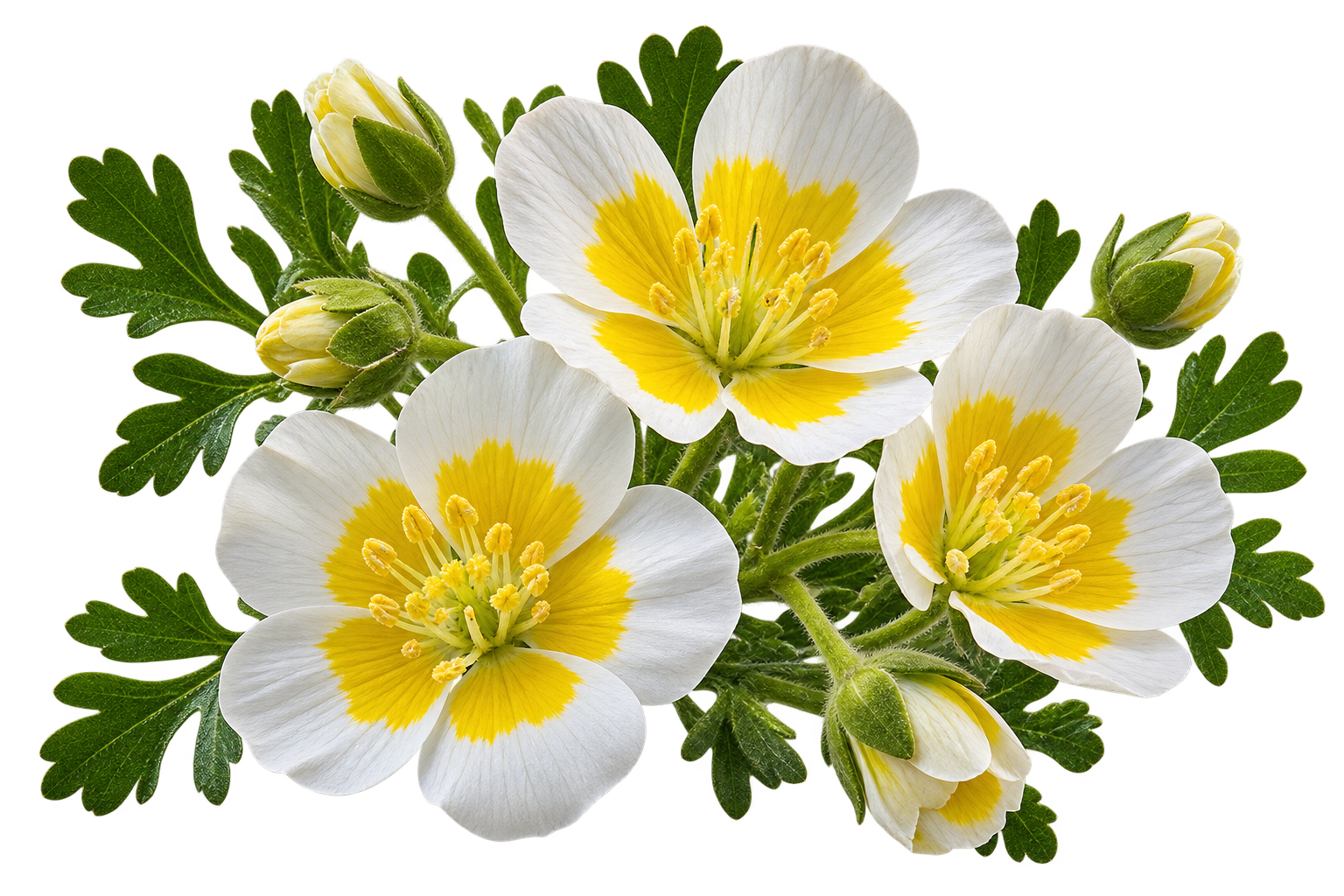
Meadowfoam (Limnanthes species, including Limnanthes alba and Limnanthes douglasii) is a low-growing winter annual wildflower native to the Pacific Northwest of the United States, famous for producing a foamy canopy of white-and-yellow blooms and yielding a highly stable industrial seed oil.
If Arnica Montana is an ancient ingredient in Trail Recovery+, Meadowfoam Seed Oil (MFSO) is the brand new baby! It’s also one of the workhorses.
And this is one ingredient we probably haven’t talked about nearly enough. MFSO was first discovered to be biologically compatible in the 1970’s. It was first available over the counter in the 1980’s.
Meadowfoam—Limnanthes alba—produces a seed oil with an unusual lipid composition. Most familiar plant oils contain large proportions of fatty acids with chains around 16–18 carbons long.
Meadowfoam is different. Its oil is characterized by unusually long-chain fatty acids, and that unusual chemistry contributes to one of the properties that makes MFSO particularly attractive to formulators:
stability.
Plant oils don’t remain unchanged forever.
Their lipids can oxidize. Heat, oxygen and light can accelerate those reactions. Eventually that can affect odor, color, performance and the overall integrity of an oil-based formulation.
MFSO’s unusual fatty-acid composition makes the oil notably resistant to oxidative deterioration compared with many conventional botanical oils.
For an anhydrous balm built largely from lipids, that’s valuable.
But stability isn’t the only reason it’s there.
What Meadowfoam does on the skin
Meadowfoam Seed Oil is an excellent emollient.
It helps soften the skin and creates a smooth, substantive feel without requiring us to rely entirely upon heavier waxes.
That word—substantive—is important to Trail Recovery+.
We’re not trying to create something that vanishes instantly.
For this particular product, we want persistence on the skin. We want some of the lipid phase to remain behind afterward. This allows enough working time for someone to massage it into a knee, calf, shoulder, hand or lower back and to remain active for hours after application, not minutes.
We also want that same formulation to help condition skin that may itself be dry, weathered or stressed from the day’s activities. That’s why Meadowfoam Seed Oil occupies such a significant place in the formula. It isn’t an exotic botanical sprinkled into the recipe for marketing purposes. It’s part of the architecture of the balm.
Read More About Meadowfoam Seed Oil…
A 2020 study specifically characterized Meadowfoam Seed Oil (Limnanthes alba) and compared its chemical and physical properties with extra-virgin olive oil. Researchers confirmed its unusual long-chain fatty-acid composition and found an extremely low calculated oxidizability value—0.032 for Meadowfoam versus 1.780 for olive oil in their analysis.
Chemical and Physical Properties of Meadowfoam Seed Oil — Journal of Spectroscopy
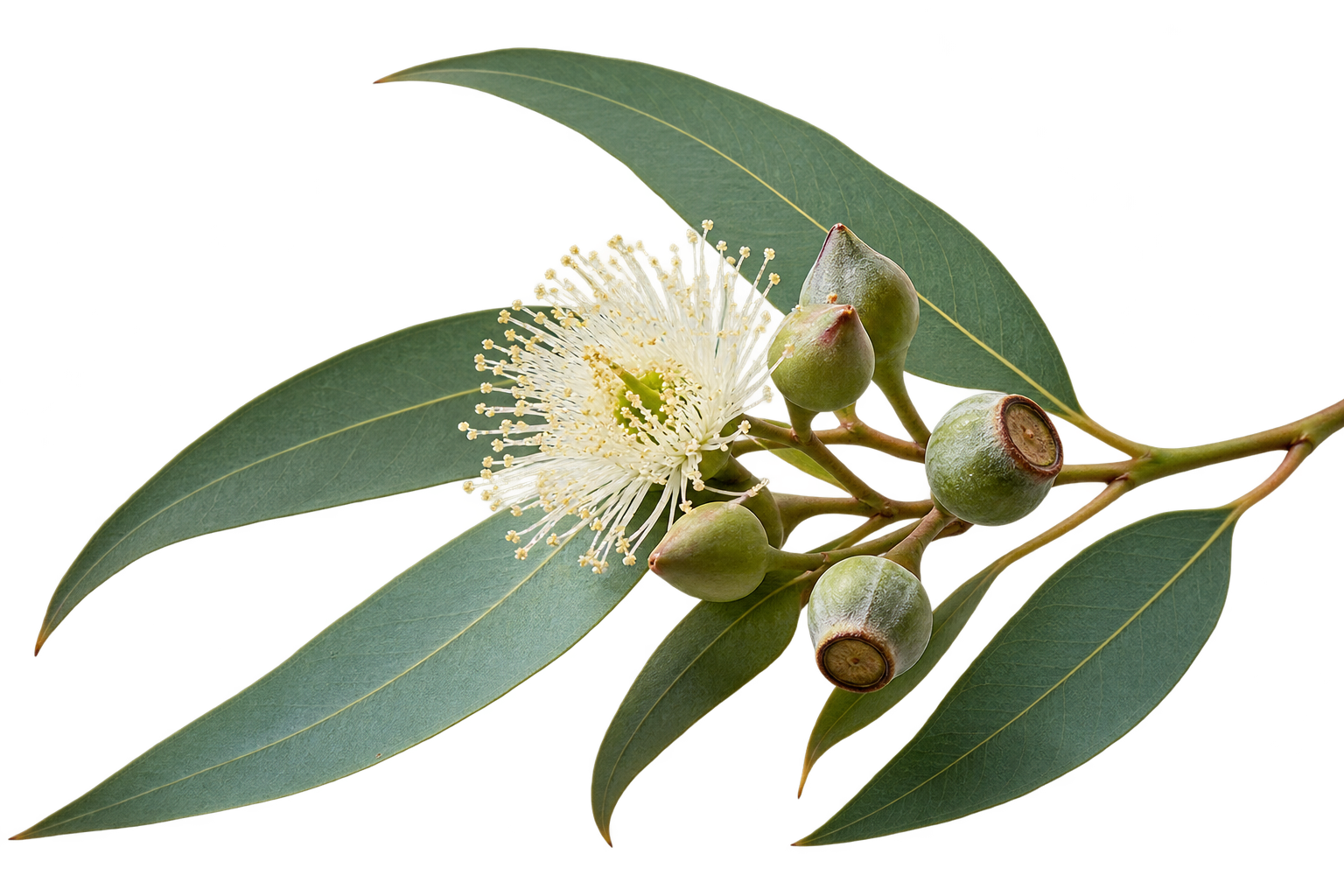
Eucalyptus is a diverse group of more than 700 species of evergreen trees and shrubs in the myrtle family, Myrtaceae, most native to Australia. The leaves are the primary part of the plant used medicinally and are rich in aromatic volatile compounds. Eucalyptus essential oil is typically produced by steam distilling the fresh or partially dried leaves and young leafy twigs, concentrating compounds such as 1,8-cineole (eucalyptol) that give the oil its distinctive aroma and many of its characteristic properties.
Eucalyptus: More Than the Smell of a Muscle Rub
Open a jar of Trail Recovery+ and eucalyptus announces itself pretty quickly. That’s intentional. But fragrance isn’t the entire reason it’s there.
Eucalyptus essential oil contains numerous volatile botanical compounds. One of its best-known constituents is 1,8-cineole, also called eucalyptol.
1,8-cineole has been extensively investigated scientifically, including research into its anti-inflammatory, antioxidant and other biological activities. Importantly, much of that evidence comes from laboratory, animal or pharmaceutical research.
Researchers examining Eucalyptus globulus essential oil have identified 1,8-cineole as a major component and investigated the oil’s interactions with skin cells and inflammatory markers in experimental models.
For TR+, eucalyptus also contributes something much more immediate: Sensory Feedback
There’s a sensory component to recovery products that shouldn’t be dismissed. The smell of eucalyptus, its fresh character and the sensation associated with applying an aromatic botanical balm all contribute to the experience of using Trail Recovery+. And experience affects behavior.
If someone enjoys using a product, they’re more likely to massage it in thoroughly and more likely to use it consistently. That’s part of formulation too.
Rosemary: Eucalyptus’s Botanical Partner
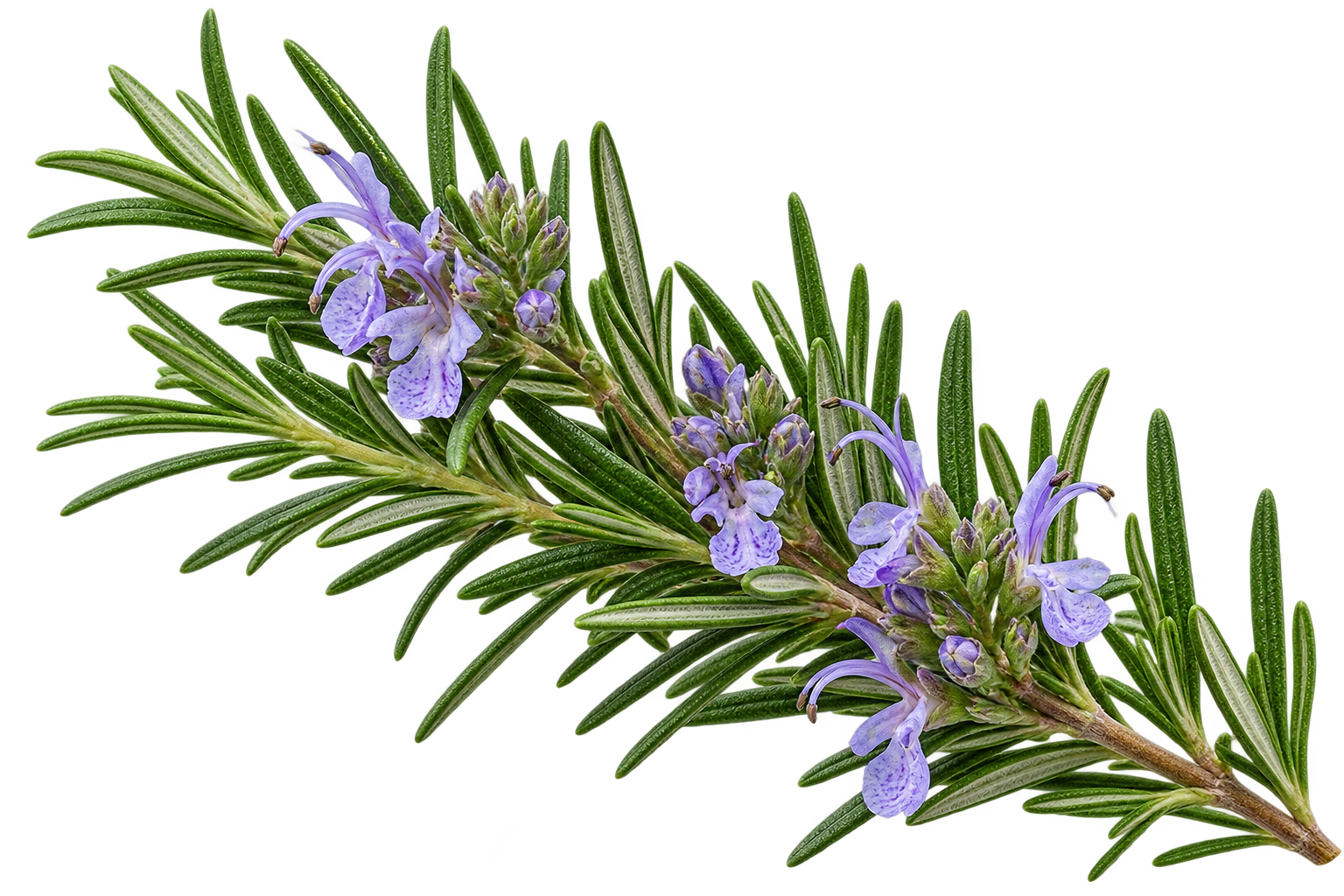
Rosemary (Salvia rosmarinus) is an aromatic evergreen shrub in the mint family, Lamiaceae, native to the Mediterranean region. Its narrow, needle-like leaves contain aromatic compounds that give rosemary its distinctive fragrance. The leaves and flowering tops are the primary parts used medicinally and are also steam-distilled to produce rosemary essential oil.
Rosemary may be one of the most familiar plants in Trail Recovery+, but chemically it’s remarkably complex.
Rosemary essential oil isn’t one molecule.
Depending upon the plant variety, growing conditions, geographic origin and chemotype, rosemary oil can contain varying proportions of compounds including 1,8-cineole, camphor and α-pinene, among numerous other volatile constituents.
That variability is one reason we’re cautious about reducing botanical ingredients to simplistic claims.
Plants are complicated.
Interestingly, rosemary and eucalyptus also overlap chemically. 1,8-cineole can occur in both oils.
So rather than thinking about eucalyptus and rosemary as two completely unrelated ingredients, we can think about them as components of a broader aromatic botanical system.
They contribute different aromatic notes and different chemical profiles, but together they give Trail Recovery+ much of its distinctive identity.
And again, research into constituents such as 1,8-cineole has generated considerable scientific interest in their interactions with inflammatory and oxidative pathways.
We’re interested in that science. We’re equally interested in hundreds of years of human experience using aromatic plants topically. Neither, by itself, is justification for making exaggerated medical claims. But together they provide a rational reason for asking:
What happens when traditional recovery botanicals are incorporated into a modern, carefully designed lipid system?
That’s much closer to the question we’re exploring with Trail Recovery+.
Sea Buckthorn: Where Recovery Starts Looking Like Skincare
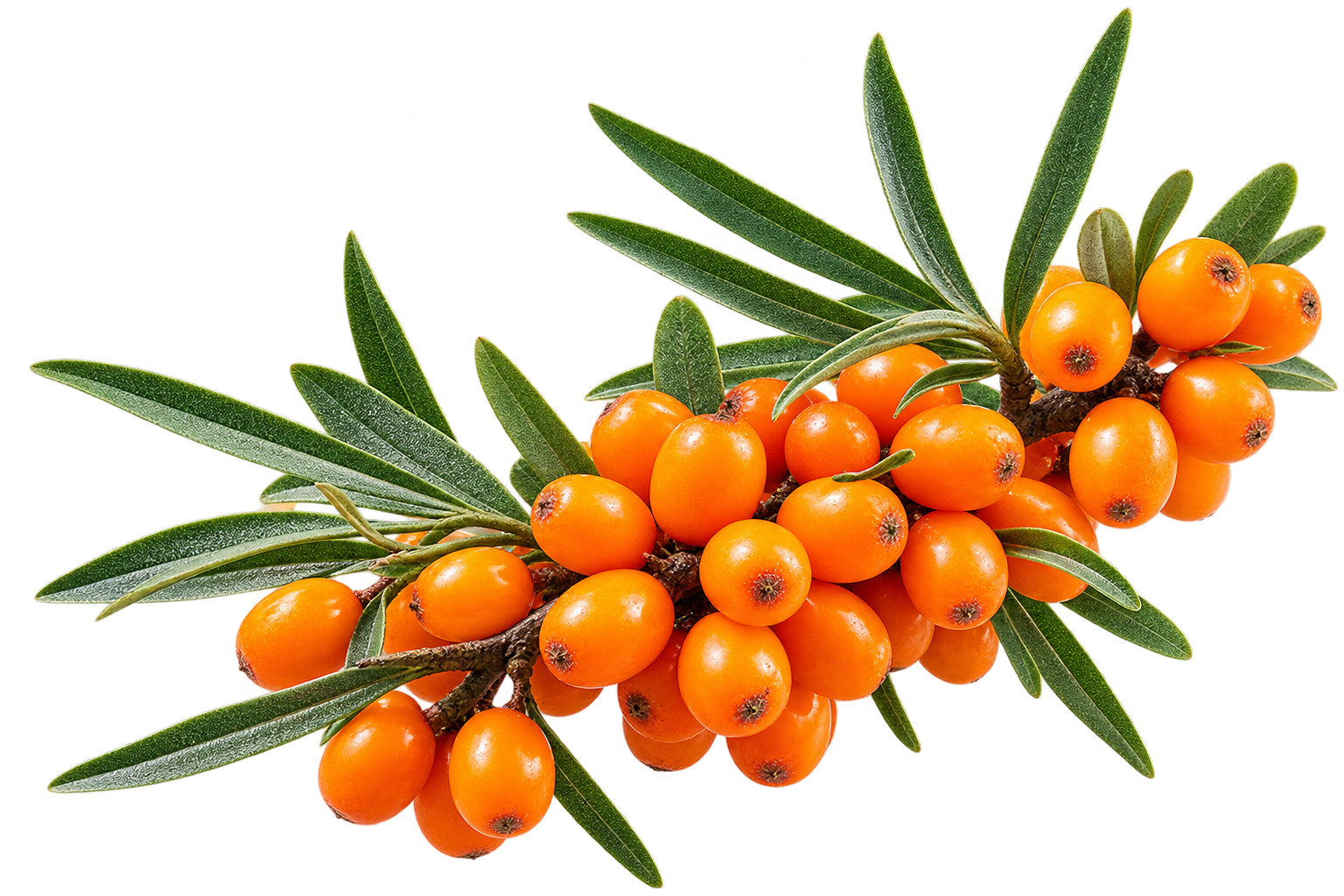
Sea Buckthorn (Hippophae rhamnoides) is a hardy, thorny shrub native to Europe and Asia, known for its dense clusters of bright orange berries. The berries are naturally rich in carotenoids, tocopherols, fatty acids and other antioxidant compounds. Both the fruit pulp and seeds are used to produce Sea Buckthorn oils, which have a long history of use in traditional medicine and are now widely used in skincare for their emollient and skin-conditioning properties.
Sea Buckthorn may be the ingredient that best explains where SUI WASSER is going.
Because Trail Recovery+ isn’t only about what lies underneath the skin. TR+ is very much a dual-purpose balm. If you’ve just spent a day outdoors, cycling, hiking, gardening or working outside, your muscles and joints aren’t the only parts of your body that experienced that environment. Your skin was there too. It experienced the sun. The wind. The cold. The heat. The sweat. The dry air. The bug-bites. And possibly some friction from clothing or equipment.
That’s why we began adding ingredients to Trail Recovery+ that traditionally might have been associated more closely with sophisticated skincare formulations.
And Sea Buckthorn is one of the most interesting.
One plant, two very different oils
Sea Buckthorn (Hippophaë rhamnoides) produces oil from both its seeds and its fruit pulp, and they’re chemically distinct.
The seed oil tends to contain higher proportions of polyunsaturated fatty acids, while the berry/pulp oil is particularly notable for palmitoleic acid—omega-7—and carotenoids. Both contain various lipophilic compounds, including tocopherols and phytosterols, although the exact composition depends upon source and processing.
Those carotenoids also explain something you’ll notice immediately: the color.
Sea Buckthorn can produce intensely orange-to-red oils. We don’t consider that a problem to hide. Quite the opposite. It’s a visual reminder that we’re working with biologically and chemically complex plant materials rather than trying to make every formulation perfectly white and anonymous.
Sea Buckthorn contains a remarkably diverse collection of naturally occurring compounds, including carotenoids, tocopherols, fatty acids, phytosterols and other phytochemicals. Reviews of the plant have documented substantial interest in its antioxidant and skin-related properties, while also noting that much of the mechanistic evidence remains experimental and additional clinical research is needed.
That combination makes Sea Buckthorn particularly compelling to us. It’s not simply another carrier oil. It’s botanical lipid nutrition.
Read More About Sea Buckthorn…
“Ethnomedicinal uses, phytochemistry and dermatological effects of Hippophae rhamnoides L.: A review”
A 2020 review examined the phytochemistry, traditional uses and dermatological research surrounding Hippophae rhamnoides. It discusses the berries, seeds and leaves and the plant’s carotenoids, flavonoids, fatty acids and other compounds, while also reviewing research related to skin and wound healing. The authors explicitly note that some areas still need more extensive research.
Why Put All Five Together?
This is where Trail Recovery+ becomes more interesting than its individual ingredients. We didn’t formulate it around the assumption that there is one magical botanical. There isn’t. Instead, we’re interested in systems.
Arnica brings centuries of traditional topical use and a fascinating family of bioactive plant compounds.
Meadowfoam Seed Oil provides an unusually stable, long-chain botanical lipid system and beautiful emolliency.
Eucalyptus contributes its characteristic aromatic profile and compounds such as 1,8-cineole.
Rosemary adds another complex botanical essential oil with overlapping and complementary aromatic constituents.
Sea Buckthorn brings a completely different family of fatty acids, carotenoids, tocopherols and other lipid-soluble phytochemicals.
Then we surround those ingredients with the rest of the formulation.
Jojoba.
High-oleic sunflower oil.
Squalane.
Coco-caprylate.
Vitamin E.
CoQ10.
Bisabolol.
Beeswax and soy wax.
Some provide structure. Some improve glide. Some condition the skin. Some contribute antioxidant protection. Some help us make a relatively substantial botanical balm spread smoothly enough to massage over a large area. They’re doing different jobs. And that’s exactly the point.
Recovery Doesn’t Stop at the Muscle
There’s a larger idea behind Trail Recovery+ that has gradually become central to the way we think about SUI WASSER.
The outdoor industry tends to divide our bodies into categories.
We have...
Products for our muscles.
Products for our joints.
Products for our skin.
Products for sun exposure.
Products for dry skin.
Products for recovery.
But our bodies don’t experience the outdoors that way. Your knee and the skin covering your knee just completed the same ride. Your shoulders and the skin covering them just spent the same day in the garden. Your legs and the skin covering them just spent the same day on the mountain.
Why should recovery necessarily treat those as unrelated problems?
That’s why Trail Recovery+ has continued evolving. What started as a botanical muscle-and-joint balm has gradually become something more interesting to us: a bridge between physical recovery and skin recovery.
We’re still experimenting. We’re still reading. We’re still reformulating. And we’re still learning what these plants can—and cannot—do. But the objective behind Trail Recovery+ has become increasingly clear: Build a serious botanical balm for people who intend to keep using their bodies.
Not occasionally.
Not carefully.
For a lifetime.
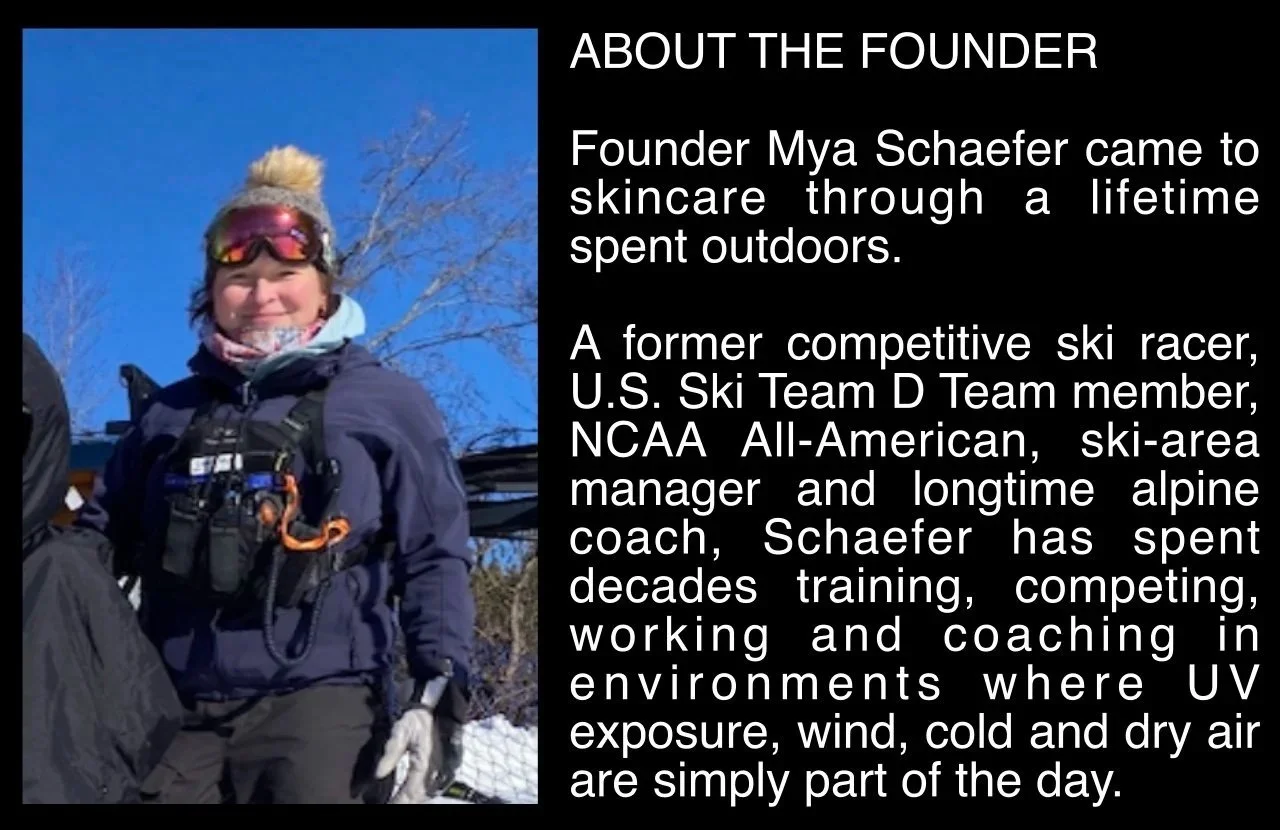
About the Author & Founder Mya Schaefer
