
BUT WE NEED TO TALK ABOUT SKIN.
…ALL OF IT.
Talking about skin can get uncomfortable. Fast. Humanity has a terrible history of weaponizing skin color. We’ve used it to discriminate, to judge, to categorize, and to determine who deserves dignity, opportunity, and respect.
And that history isn’t safely tucked away in some dusty textbook. It’s happening in our own time—today! Here in the United States, the presence of masked ICE agents and reports of immigration enforcement targeting, injuring, and even killing people based on perceived race, ethnicity, or national origin have brought deeply troubling questions about discrimination and racial profiling into sharp focus.
Let’s be clear about where we stand. Judging someone’s rights, dignity, or humanity by the color of their skin is wrong. Racial profiling is wrong. And we unequivocally condemn it. We refuse to pretend otherwise.

PHOTO: Federal immigration officers at a U.S. immigration court in New York City. Credit: PBS News
But there’s another conversation about skin that deserves our attention. One grounded in biology, health, and the remarkable organ every human being depends upon. Because skin color should never determine someone’s worth. But understanding skin biology can make a meaningful difference in their well-being.
The tragedy of Skin Cancer… Yes, skin cancer is very treatable today. But typically it is not treated with a pill, rather most skin cancers are treated with a knife.
Content Warning
CONTENT NOTICE: The following photographs document actual skin cancer surgeries and postoperative wounds. Some readers may find them disturbing.
CONTENT NOTICE: The following photographs document skin cancer surgery and postoperative wounds. Some readers may find these images disturbing.
VIEW CLINICAL PHOTOGRAPHS
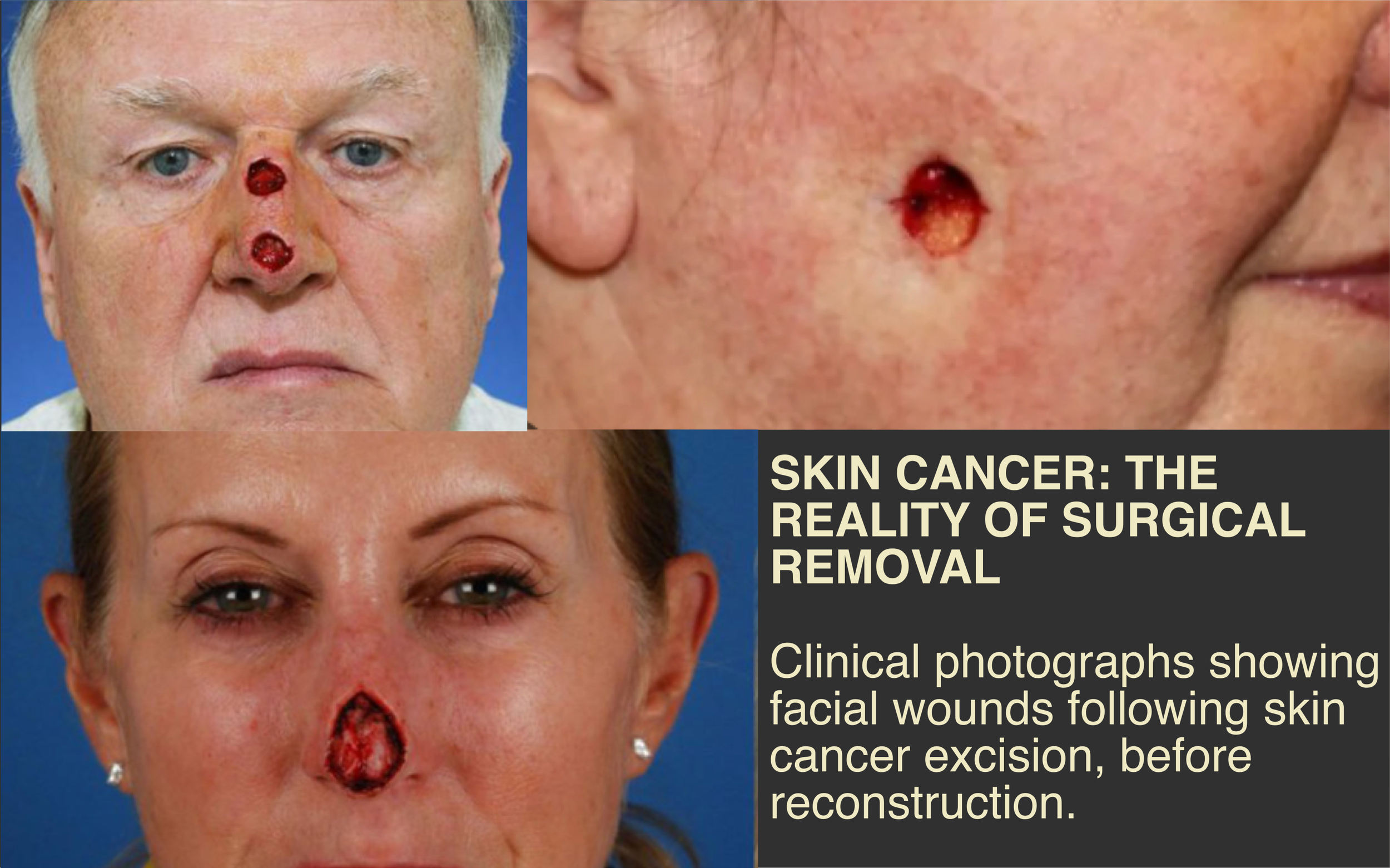
THE REALITIES OF SKIN CANCER TREATMENT.
After a lifetime working and living in the outdoor
industry, I've witnessed far too many cases.
I've experienced skin cancer treatment firsthand.
These aren't abstract medical statistics.
They're real people, real consequences, and a
powerful reminder of why skin health matters.
SUI WASSER was born from a determination
to do something about it.
These aren’t special effects. They aren’t Halloween makeup. And they certainly aren’t the carefully retouched images we’re accustomed to seeing in skincare advertisements.
This is the medical reality of skin cancer. We believe it’s important to understand the consequences.
Depending on the type, location, and extent of the disease, treating skin cancer can require extensive surgical excision, multiple procedures, reconstructive surgery, skin grafts, and prolonged recovery. Sometimes the resulting wounds are substantial. Sometimes the scars are permanent. And sometimes the consequences extend far beyond appearance.
Skin cancer can be disfiguring, life-threatening, and, in some cases, fatal. These images aren’t here to frighten you. They’re here because this side of skincare deserves to be seen and discussed.
Skin cancer can affect anyone, regardless of age, skin color, or lifestyle. Ultraviolet exposure is a major preventable risk factor for many skin cancers, and early detection can make a critical difference in treatment and outcomes.
Protective clothing, shade, appropriate sunscreen, regular skin awareness, and timely medical evaluation all matter. And let’s be absolutely clear: No moisturizer, botanical oil, antioxidant balm, or miracle ingredient replaces proven UV protection or medical care. At SUI WASSER, we believe Skin Longevity begins with understanding the realities of the organ we’re trying to protect.
Because caring for your skin is about a hell of a lot more than looking younger or using it to hurt someone.
Why skin color, discrimination, beauty standards, and skin health deserve a more thoughtful conversation.
Your skin tells a story. But it should never determine your worth. For centuries, human beings have attached social meaning to skin. Color. Race. Beauty. Age. Identity. Status. We’ve used skin to categorize people, judge appearances, establish beauty standards, and, far too often, justify discrimination. That history is real. Its consequences are real. And it has made conversations about skin extraordinarily complicated.
But somewhere in that conversation, we’ve lost sight of something fundamental. Skin is an organ. An extraordinary, living, constantly adapting organ. It protects us. It responds to our environment. It changes throughout our lives. And regardless of our age, ancestry, complexion, or identity, it deserves thoughtful care.
That’s where we believe the conversation about skincare needs to begin.
1 | WHEN SKIN BECOMES MORE THAN SKIN
Skin is one of the first things we notice about another person. Unfortunately, societies have spent generations attaching judgments to those observations.
Skin color has been used to establish social hierarchies. Beauty standards have favored certain complexions while marginalizing others. Colorism has influenced how people are perceived and treated, sometimes even within the same communities. It is a tragic part of human history. These experiences have consequences that extend well beyond appearance.
For some people, conversations about skin carry memories of discrimination, exclusion, or pressure to conform to somebody else’s definition of beauty. For others, skincare has become inseparable from an industry that constantly identifies new imperfections requiring expensive solutions.
The result is a subject that can be surprisingly difficult to discuss. When skin has been used as a basis for judgment, even conversations intended to promote skin health can feel uncomfortable.
We believe there’s a better way forward. One that acknowledges the social history of skin while making room for a more informed conversation about its biology.
2 | THE BEAUTY INDUSTRY DIDN’T EXACTLY HELP
Let’s talk about the elephant in the skincare aisle.
For decades, the beauty industry has made enormous profits selling the idea that something about our skin needs fixing.
Too dark.
Too pale.
Too old.
Too wrinkled.
Too uneven.
Too imperfect.
Every generation gets a new definition of beautiful, accompanied by another collection of products promising to get us there. Skin-lightening products have sometimes reinforced discriminatory beauty standards. Anti-aging campaigns routinely portray natural biological changes as problems requiring correction. And the endless parade of digitally perfected faces has helped establish expectations that real human skin was never designed to meet.
Somewhere along the way, skincare became less about caring for skin and more about convincing people to dislike what they see in the mirror.
That’s a problem. Not because cosmetic skincare is inherently wrong. People should be free to change their appearance, enjoy beauty products, and make personal choices about how they look.
The problem begins when marketing turns normal human variation into a manufactured deficiency. Aging isn’t a character flaw. Pigmentation isn’t a defect. And healthy skin doesn’t come in one color.
3 | LET’S TALK ABOUT WHAT SKIN ACTUALLY DOES
Strip away the advertising campaigns, beauty standards, and social expectations. What’s left? One of the most remarkable organs in the human body. Your skin is a complex biological system responsible for maintaining the boundary between your body and the outside world.
Its functions include:
Regulating water loss and maintaining the body’s protective barrier.
Participating in immune defense.
Helping regulate body temperature.
Providing sensory information about the environment.
Responding to ultraviolet radiation and other environmental stressors.
Continuously renewing and repairing its tissues.
The outermost layer of the epidermis, known as the stratum corneum, contains a highly organized arrangement of cells and lipids.
Ceramides, cholesterol, and free fatty acids help create the permeability barrier that limits excessive water loss and protects against environmental challenges.
These fundamental biological functions are shared across human skin.
But that doesn’t mean all skin is identical.
Skin color matters biologically, too.
Melanin contributes to pigmentation and provides some natural protection against ultraviolet radiation. Different levels and types of pigmentation can influence how skin responds to sunlight, how certain conditions appear, and how pigmentation changes develop after inflammation.
Some skin conditions also present differently across skin tones. For example, inflammation that appears bright red on lighter skin may appear violet, brown, gray, or less visibly discolored on darker skin. Recognizing these differences improves our understanding of skin health.
Respecting skin diversity means understanding both what human skin shares and where meaningful differences exist. That’s biology.
And biology deserves a place in the conversation.
4 | THE OUTDOORS DOESN’T CARE ABOUT BEAUTY STANDARDS
Now let’s bring this conversation into SUI WASSER’s world.
The mountains.
The snow.
The water.
The wind.
The cold.
The sun.
Spend enough time outdoors, and your skin becomes intimately familiar with environmental exposure. Ultraviolet radiation affects skin across the full spectrum of pigmentation, although the degree of natural UV protection and patterns of damage differ.
Cold temperatures, low humidity, wind, even repeated washing can contribute to dryness and place additional demands on the skin barrier. Sweat, saltwater, chlorine, and changing environmental conditions can also influence skin comfort and moisture balance. These exposures don’t ask whether you’re 25 or 65.
They don’t care whether you’re an athlete, a mountain guide, a construction worker, a gardener, or someone who simply enjoys being outside. And they certainly don’t care whether your complexion matches the latest beauty campaign. Your skin has a job to do.
It needs to help protect you while you get on with living your life. Our job is to understand its needs and care for it accordingly. That includes appropriate sun protection, sensible exposure habits, effective moisturizing, and consistent attention to skin-barrier health. It also means recognizing that individual skin needs vary.
No single skincare formula is automatically ideal for every person, every environment, or every skin condition.
5 | SKIN LONGEVITY ISN’T ABOUT LOOKING LIKE SOMEBODY ELSE
The term anti-aging has dominated skincare marketing for decades. But consider what that phrase suggests. That aging is something to fight. That the visible evidence of a life lived is something to erase. That success means looking younger than you are. We think there’s a more useful objective.
Skin Longevity.
A commitment to maintaining the health, comfort, and resilience of your skin throughout your life. It’s about understanding the biological changes that accompany aging and making informed decisions about how to care for your skin. As skin ages, changes in lipid metabolism, hydration, and barrier recovery can influence how effectively it responds to environmental challenges.
Thoughtful skincare can help address dryness, support moisture retention, and maintain skin comfort. Consistent sun protection can reduce avoidable ultraviolet damage. And effective formulations can provide complementary ingredients that support everyday skin conditioning.
None of this requires you to look younger. None of it requires you to change your natural complexion. And none of it requires you to meet somebody else’s definition of beautiful.
Your skin has already carried you through a lifetime of experiences. The goal is to help it keep doing its job.
6 | OUR PHILOSOPHY: RESPECT THE PERSON. CARE FOR THE SKIN.
At SUI WASSER, we develop waterless, lipid-rich skincare for people who live life outdoors. Our formulations combine complementary botanical oils, waxes, and carefully selected skin-conditioning ingredients to help maintain moisture, reduce dryness, and support skin-barrier comfort.
Our philosophy is built around three principles:
PROTECT → REPLENISH → RECOVER
PROTECT
Respect the environment. Understand exposure. Use appropriate sun protection and protective skincare to help reduce avoidable environmental stress.
REPLENISH
Provide moisture-retaining, lipid-rich conditioning ingredients that help maintain skin softness, flexibility, and comfort.
RECOVER
Establish consistent post-exposure skincare habits that address dryness and help maintain the skin barrier after time spent outdoors. These principles apply across ages, backgrounds, and skin tones. But effective skincare also requires understanding individual needs. We don’t pretend that everyone has identical skin.
We believe everyone deserves access to thoughtful, scientifically informed skincare. And we believe that conversation should begin with respect.
7 | IT’S TIME TO CHANGE THE CONVERSATION
Skin color has meaning. History has meaning. Personal experience has meaning. We shouldn’t dismiss any of those realities. But neither should we allow the complicated social history surrounding skin to prevent thoughtful conversations about skin health.
We can acknowledge discrimination without defining people by their appearance. We can recognize biological differences without assigning value to those differences. We can appreciate beauty without turning normal human variation into something that needs correcting. And we can discuss skincare without suggesting that anyone’s natural skin is inadequate.
Healthy skin doesn’t have a preferred color. It doesn’t have an ideal age. And it doesn’t require perfection. It requires understanding, appropriate care, and respect for the person living in it.
OUR PROMISE
EVERY PERSON DESERVES RESPECT. EVERY SKIN DESERVES CARE.
We believe in the dignity of every human being. Every identity. Every skin color. Every life lived. We don’t judge the skin you’re in. We care about what it goes through. Because your skin is far more than what the world sees. It’s your first line of defense against everything the world throws at you. The sun. The wind. The cold. The heat. The miles. The years.
It’s the living, breathing organ that protects you through every adventure, every challenge, and every chapter of your life.
YOUR SKIN HAS BEEN THERE FOR EVERY MOMENT. IT DESERVES TO BE THERE FOR ALL THE ONES STILL TO COME.
That’s why we believe in protecting it, replenishing it, and supporting its resilience for the long haul.
RESPECT THE PERSON. UNDERSTAND THE BIOLOGY. CARE FOR THE SKIN.
That’s Skin Longevity.
SUI WASSER | BUILT FOR A LIFETIME OUTDOORS.
Thank you for reading.
Peace.
