IT EXPERIENCES A FORMULATION.
Your skin is a living organ. Its protective barrier depends on a complex organization of lipids, proteins, and moisture-regulating compounds. Its response to environmental exposure involves multiple interconnected biological systems. Yet much of the skincare industry and marketing messaging we hear revolves around isolated ingredients and narrowly defined benefits.
Examples include: Vitamin C for brightness. Retinol for fine lines. Hyaluronic acid for hydration. Ceramides for the skin barrier. Niacinamide for seemingly everything.
Welcome to what we call the Hero Ingredient Fallacy.
Major skincare brands spend millions promoting their must-have ingredients. Collagen. Vitamin C. Retinol. The list goes on. Each promises to address a particular concern, often encouraging consumers to think about skincare as a collection of individual ingredients rather than a complete formulation.
To be clear, many of these ingredients are valuable. Several have substantial scientific research supporting their benefits. And, if we’re talking about medication, listen to your doctor. But for daily needs and long-term skin health, your skin doesn’t experience one ingredient at a time. It experiences everything you put on it.
It encounters, reacts, and requires the entire formulation: the lipids, emollients, waxes, antioxidants, active compounds, water content—or absence of water—ingredient concentrations, stability, and the protective film a product may leave on the skin.
And those details matter.
SKIN IS NOT A COLLECTION OF ISOLATED PROBLEMS
Your skin doesn’t operate as a collection of unrelated biological processes waiting for individual ingredients to fix them. Its outermost layer, the stratum corneum, helps regulate moisture loss, limits the entry of environmental irritants, and responds continuously to cleansing, friction, sweat, wind, cold, dry air, and ultraviolet exposure.
Scientists frequently describe this protective structure using a brick-and-mortar analogy. The bricks are flattened skin cells called corneocytes. The mortar is an organized lipid matrix containing ceramides, cholesterol, and free fatty acids. These components don’t work independently. Their organization and relative proportions influence how effectively the skin maintains its barrier.
Research examining mixtures of physiological skin lipids has demonstrated that composition and proportion can influence barrier recovery. That doesn’t mean applying a mixture of botanical oils recreates the skin’s natural lipid architecture. It does, however, illustrate a larger biological principle:
What goes into a formulation matters. How those ingredients are combined matters, too.
For people who spend significant time outdoors, this distinction deserves particular attention. Skin repeatedly exposed to sun, wind, cold, heat, dry air, altitude, sweat, and friction faces overlapping environmental challenges. Dryness, moisture loss, discomfort, and changes in the skin’s protective barrier don’t necessarily arise from one isolated cause.
So why should we expect one celebrated ingredient to address every aspect of the problem?
THERE’S A BIGGER CONVERSATION WORTH HAVING
At SUI WASSER, we believe skincare should be evaluated through a broader biological and functional lens.
We call it Skin Nutrition or Topical Nutrition. Not nutrition in the dietary sense. Not a claim that botanical oils can replace essential nutrients delivered through your bloodstream. We’re talking about a formulation philosophy built around complementary skin-conditioning lipids, fatty acids, antioxidants, emollients, and protective ingredients.
Different compounds. Different properties. Different contributions.
Some ingredients help soften and condition the skin. Others help reduce moisture loss, contribute antioxidant activity, improve spreadability, or support the overall stability and performance of the formulation. Their presence alone doesn’t guarantee a benefit. Concentration, compatibility, delivery, and the properties of the finished product all matter.
We don’t believe that adding more ingredients automatically creates better skincare. We believe every ingredient should have a reason to be there.
Our objective is to develop formulations that support the skin’s protective environment, help retain moisture, and provide thoughtful care for skin repeatedly exposed to the elements. Because for people who live life outdoors, the question shouldn’t stop at:
“Does this product contain the latest hero ingredient?” We think the more important questions are:
What does the complete formulation actually provide?
What biological and protective functions does it address?
And what might it be missing?
That’s the conversation behind Skin Nutrition. And it’s why we believe your daily skincare should offer more than an isolated ingredient or a single cosmetic promise.
2 | WHAT DOES YOUR SKIN ACTUALLY NEED?
A living organ requires more than one ingredient.
Before we can understand what’s potentially missing from our skincare, we need to understand what healthy skin requires. And the answer is considerably more complicated than any single ingredient.
Your skin is a living, metabolically active organ. Its cells continuously synthesize proteins, produce and organize lipids, regulate moisture, respond to environmental stress, and replace damaged or aging structures.
These activities depend on an interconnected network of nutrients, biochemical compounds, and protective systems.
Some are supplied through our diet and bloodstream. Others are synthesized within the skin itself. Certain compounds can also be delivered topically to support specific aspects of skin function.
Healthy skin doesn’t depend on one miracle nutrient. It depends on multiple biological systems receiving the resources they need to function properly.
Let’s examine some of the most important.
ESSENTIAL FATTY ACIDS: THE BUILDING BLOCKS OF HEALTHY SKIN
Fatty acids are fundamental components of skin biology. They contribute to cellular membranes, participate in signaling pathways, and influence the organization and function of the skin’s protective barrier.
Some fatty acids can be synthesized by the body. Others must come from dietary sources. These are known as essential fatty acids.
Two are particularly important:
Omega-6 | Linoleic Acid (LA)
Linoleic acid is an essential fatty acid with a well-established role in skin-barrier physiology. It contributes to the formation of specialized ceramides involved in maintaining the structural organization of the stratum corneum.
Essential fatty acid deficiency can impair barrier function and contribute to abnormal scaling and increased water loss. Linoleic acid is present in botanical oils such as rosehip, sunflower, argan, and oat.
Omega-3 | Alpha-Linolenic Acid (ALA)
Alpha-linolenic acid is the other essential fatty acid. It contributes to normal fatty acid metabolism and serves as a precursor to longer-chain omega-3 fatty acids, although conversion in humans is limited.Omega-3 fatty acids also participate in pathways involved in inflammatory signaling. Rosehip oil is one botanical source of alpha-linolenic acid.
Research into the benefits of topical omega-3 fatty acids is continuing, and their effects depend on the particular compound, formulation, and skin condition.
A critical distinction: Linoleic acid and alpha-linolenic acid are essential dietary fatty acids. Their presence in a topical product does not establish that the product corrects a nutritional deficiency.
OTHER IMPORTANT FATTY ACIDS: DIFFERENT CHEMISTRY, DIFFERENT FUNCTIONS
Not every biologically relevant fatty acid is nutritionally essential.
Several others are important to skin physiology or useful in topical formulations.
Omega-9 | Oleic Acid
Oleic acid is a monounsaturated fatty acid found in oils such as argan and oat. It contributes to the emollient characteristics of many botanical oils. However, oleic acid can also alter the organization of stratum corneum lipids and increase skin permeability. At sufficiently high concentrations, it may compromise barrier integrity. This illustrates why fatty acid diversity must be evaluated alongside concentration and formulation design.Omega-7 | Palmitoleic Acid
Palmitoleic acid is a monounsaturated fatty acid found in notable quantities in sea buckthorn berry oil. It has attracted scientific interest for its biological signaling properties and potential relevance to skin physiology.However, clinical evidence for specific topical benefits is ongoing and remains limited.
Conjugated Fatty Acids | Punicic Acid
Punicic acid is a distinctive conjugated fatty acid associated with pomegranate seed oil. Laboratory research has investigated its biological activities, including effects involving inflammatory and oxidative pathways. But evidence from laboratory experiments does not necessarily establish equivalent benefits when pomegranate seed oil is applied to human skin.
Long-Chain Fatty Acids and Wax Esters
Meadowfoam seed oil contains unusual long-chain fatty acids that contribute to its stability and emollient characteristics.
Jojoba oil is chemically different from most botanical oils because it consists primarily of liquid wax esters.
These compounds can contribute to conditioning, lubrication, and the sensory characteristics of a formulation. Their chemistry also demonstrates why two ingredients described simply as botanical oils may behave quite differently.
The lesson: Fatty acids are not interchangeable. Their molecular structures, concentrations, and interactions influence their properties.
SKIN-BARRIER LIPIDS: THE ARCHITECTURE OF PROTECTION
Fatty acids are only part of the story. The skin’s outermost protective layer depends on a highly organized extracellular lipid matrix. Three major lipid classes are especially important:
Ceramides: Ceramides are a family of complex lipids that play a central role in the structure and permeability of the skin barrier. Different ceramide subclasses contribute to the organization of the stratum corneum.
Cholesterol: Cholesterol is an essential structural component of the skin’s lipid matrix. It contributes to membrane properties and the organization of barrier lipids.
Free Fatty Acids: Free fatty acids, particularly those with appropriate chain lengths, participate in the formation and organization of the extracellular lipid layers.
These three classes must exist in suitable proportions and structural arrangements for normal barrier function.
Scientific studies have demonstrated that the composition of physiological lipid mixtures can influence recovery of a disrupted skin barrier. This is an important distinction for botanical skincare.
Most botanical oils contain triglycerides or wax esters rather than the same mixture of ceramides, cholesterol, and free fatty acids found in the native barrier. They may provide useful emollient and conditioning properties, but they should not automatically be described as replacing the skin’s physiological barrier lipids.
Skin-barrier health isn’t simply about adding more oil. It’s about maintaining a functional, organized protective structure.
ANTIOXIDANTS: A NETWORK OF DIFFERENT DEFENSIVE MECHANISMS
If your profession, activity, or our lifestyle has you continually outdoors, then your skin is continuously exposed to the elements, such as UV radiation that trigger processes that can generate reactive oxygen species. These include normal cellular metabolism and environmental factors such as ultraviolet radiation and pollution.
Reactive oxygen species are not inherently harmful. They also participate in normal cellular signaling. Problems can arise when oxidative activity exceeds the capacity of protective and regulatory systems.
This is commonly described as oxidative stress. The skin maintains multiple antioxidant defenses. These include antioxidant enzymes and smaller molecules that participate in different chemical reactions.
Importantly, antioxidants do not all work through the same mechanisms.
Lipid-soluble antioxidants: These compounds can associate with lipid-rich environments, although their actual location and activity depend on formulation and biological factors.
Vitamin E | Tocopherols and Tocotrienols: Vitamin E compounds are associated with protection against lipid oxidation. Alpha-tocopherol is a particularly well-studied form.
Coenzyme Q10 | Ubiquinone and Ubiquinol: CoQ10 participates in mitochondrial electron transport and cellular redox chemistry. Its reduced form, ubiquinol, also has antioxidant properties.
Carotenoids: Carotenoids are a family of naturally occurring pigments, some of which have antioxidant activity. Sea buckthorn berry oil contains carotenoid compounds. Their concentrations and stability depend on the source, processing, and formulation.
Vitamin C | Ascorbic Acid: Vitamin C participates in collagen synthesis and several antioxidant processes. It can also interact with vitamin E chemistry under appropriate conditions. However, different vitamin C derivatives have different properties and require separate evaluation.
SUI WASSER uses tetrahexyldecyl ascorbate (THDA), a lipid-soluble vitamin C derivative, in selected formulations. (Note: THDA should not be assumed to behave identically to pure L-ascorbic acid in clinical studies).
Botanical antioxidant compounds
Plants contain numerous compounds investigated for antioxidant properties.
These include:
Polyphenols
Flavonoids
Phenolic acids
Certain terpenoids
Other specialized phytochemicals
Some botanical oils contain measurable quantities of these compounds. But their presence and biological activity vary substantially depending on extraction methods, processing, storage, and concentration. And antioxidant activity measured in a laboratory assay doesn’t automatically predict a clinical benefit in human skin.
WHY ANTIOXIDANT DIVERSITY MATTERS
Different antioxidant compounds have different chemical properties. Some interact with lipid oxidation pathways. Others participate in aqueous redox chemistry. Some may influence cellular signaling under specific conditions.
Scientific research has demonstrated that particular antioxidant combinations can improve measured outcomes compared with simpler formulations. But combining more antioxidants doesn’t guarantee greater protection.
The important question isn’t how many antioxidants a product contains. It’s whether the combination is stable, appropriately formulated, and capable of delivering a meaningful benefit.
VITAMINS: ESSENTIAL TO SKIN BIOLOGY, BUT NOT INTERCHANGEABLE
Vitamins participate in numerous processes required for healthy skin.
Several are particularly relevant to skincare research.
| Vitamin | Biological Relevance |
|---|---|
| Vitamin A | Cell differentiation, epidermal renewal, and regulation of gene expression. |
| Vitamin B3 | NAD-dependent metabolism; niacinamide also has topical evidence for supporting barrier function. |
| Vitamin B5 | Coenzyme A metabolism; panthenol is widely used for moisturizing and skin-conditioning functions. |
| Vitamin C | Collagen synthesis and antioxidant processes. |
| Vitamin D | Epidermal differentiation, immune regulation, and calcium-related signaling. |
| Vitamin E | Lipid-associated antioxidant functions. |
| Vitamin K | Blood coagulation and other physiological processes; evidence for broad topical skincare benefits is limited. |
These vitamins perform different biological functions. Their topical derivatives also differ in stability, penetration, and clinical evidence. A vitamin’s importance to human physiology does not automatically establish the effectiveness of applying it to the skin.
Nutritional necessity and topical efficacy are related questions—but they are not the same question.
PHYTOSTEROLS: PLANT-DERIVED LIPIDS WITH INTERESTING POTENTIAL
Phytosterols are naturally occurring plant compounds structurally related to cholesterol.
Examples include:
Beta-sitosterol
Campesterol
Stigmasterol
They occur in varying concentrations in botanical oils, including oat and argan oil. Phytosterols have attracted research interest for their potential biological effects, including interactions with inflammatory pathways.
They may also contribute to the properties of botanical oil formulations. However, phytosterols are not direct substitutes for cholesterol in the skin’s native barrier matrix. Their specific benefits depend on the compound, concentration, delivery system, and available evidence.
For SUI WASSER, phytosterols represent an important category to characterize within our botanical oil inventory. They are one example of why evaluating an oil solely by its omega fatty acid profile may overlook other constituents.
AMINO ACIDS, PROTEINS, AND NATURAL MOISTURIZING FACTORS
Healthy skin also depends on proteins and amino acids. Collagen, elastin, keratins, and numerous enzymes contribute to skin structure and function.
The outermost skin layer contains a collection of water-binding substances known as the natural moisturizing factor, or NMF. These include free amino acids and related compounds, among other constituents.
Natural moisturizing factors help the stratum corneum retain water. This is one reason hydration cannot be understood entirely through the presence or absence of oils.
A formulation may be highly emollient or occlusive without directly supplying the same water-binding compounds found in the skin’s natural moisturizing system.
Humectants, including glycerin and certain other moisturizing ingredients, can contribute to hydration through different mechanisms.
Moisture retention involves both attracting or holding water and limiting its escape.
These are complementary functions, not identical ones.
MINERALS AND TRACE ELEMENTS
Minerals also participate in skin biology. Examples include:
Zinc: Involved in numerous enzymes, immune processes, and normal tissue maintenance.
Copper: Participates in enzymatic reactions relevant to connective tissue and antioxidant defenses.
Selenium: Required for certain antioxidant enzymes.
Iron: Essential for oxygen transport and many metabolic processes.
Calcium: Involved in epidermal differentiation and signaling.
These are important physiological nutrients. However, their biological necessity doesn’t imply that topical application is always beneficial. Their formulation relevance depends on the specific compound, its intended function, and supporting evidence.
SO WHAT DOES THIS TELL US?
We’ve examined several categories of compounds relevant to healthy skin: Essential fatty acids. Other functional lipids. Ceramides. Cholesterol. Antioxidants. Vitamins. Phytosterols. Amino acids. Natural moisturizing factors. Minerals. And this is still not a complete description of skin biology.
Healthy skin also depends on hormones, enzymes, immune signaling, cellular metabolism, microbial interactions, and numerous other processes. No current formulation can—or needs to—supply every component involved. But understanding these systems can do two things for us (1) Prioritize Needs, and (2) Reveal something important: Different skin needs involve different biological mechanisms. That is, a compound that contributes to moisture retention doesn’t necessarily provide meaningful antioxidant activity.
An antioxidant doesn’t automatically restore a disrupted lipid barrier.
An emollient may improve skin feel without addressing the underlying cause of inflammation.
And an ingredient that performs exceptionally well in isolation may behave differently when incorporated into a complete formulation.
This is the foundation of our Skin Nutrition philosophy. Not the idea that every product should contain every possible nutrient. But the recognition that thoughtfully selected ingredients can contribute different, complementary functions.
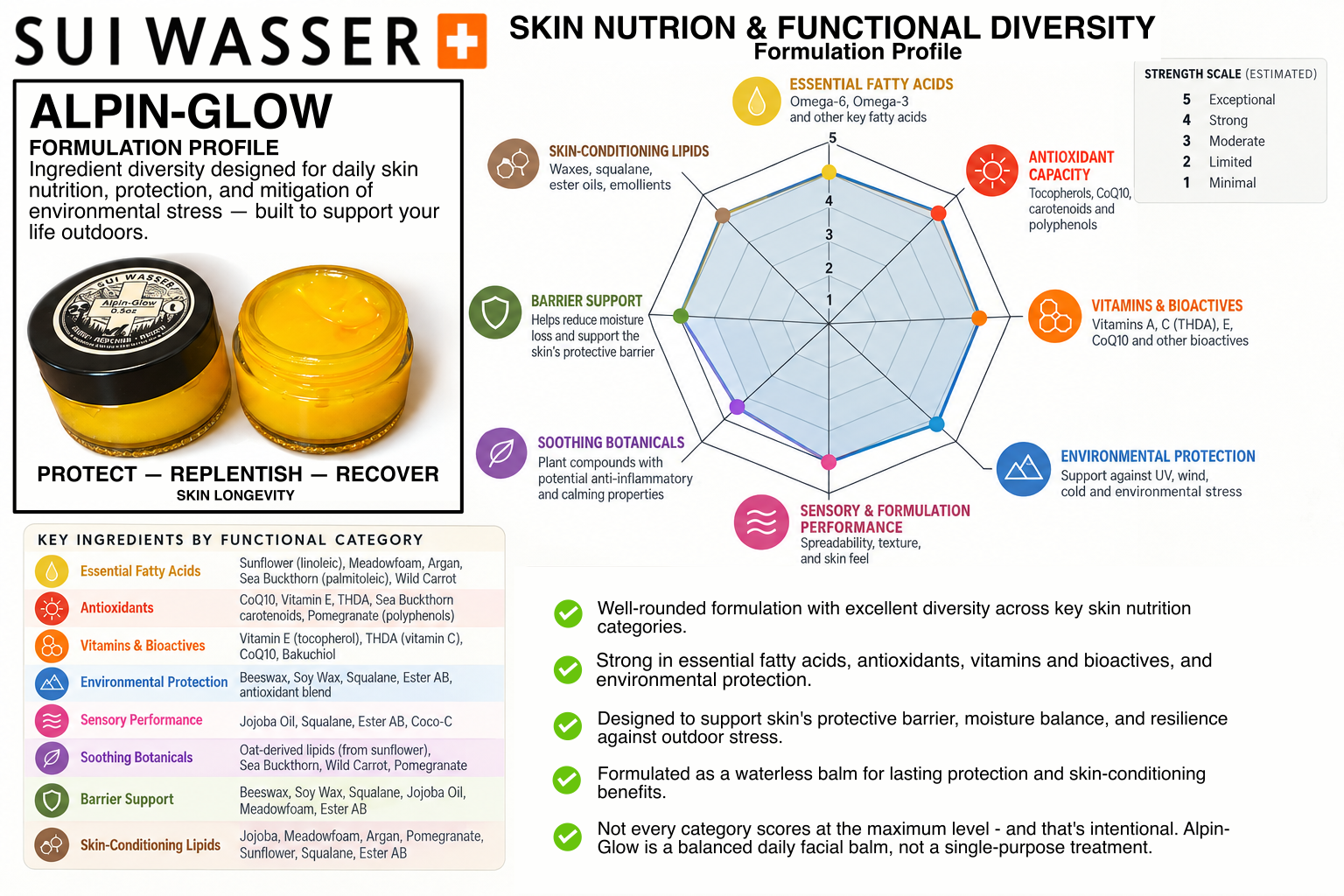
FORMULATION PROFILE | ALPIN-GLOW
What does a well-rounded skincare formulation actually look like?
Using our own Alpin-Glow facial balm as an example, this infographic explores the diversity of fatty acids, antioxidants, skin-conditioning lipids, vitamins, and protective ingredients working together within a single formulation.
The radar chart illustrates estimated strengths across eight functional categories, highlighting our approach to Skin Longevity: not simply adding more ingredients, but combining complementary ingredients with distinct purposes.
Scores are formulation assessments based on ingredient properties—not measurements of clinical effectiveness.
THE QUESTION WE SHOULD BE ASKING
When evaluating skincare, perhaps we should move beyond asking: Does this product contain a particular ingredient? And begin asking:
What biological or protective functions does the complete formulation address?
Which functions are supported by scientific evidence?
And which important needs might remain unaddressed?
Those questions lead us directly to the everyday skin problems people experience—and why understanding their underlying causes matters.
Because your skin doesn’t experience an ingredient list—it experiences a formulation.
3 | WHAT HAPPENS WHEN YOUR SKIN’S NEEDS GO UNMET?
YOUR SKIN CAN COMPENSATE. BUT COMPENSATION HAS LIMITS.
What happens when we repeatedly ask our skin to protect us from the world without giving its protective systems adequate support?
Think about what your skin does every day. It regulates moisture loss. It maintains a protective barrier against environmental irritants. It continually renews its outer layers, organizes specialized lipids, and responds to changing environmental conditions. And it does all of this without asking for our attention. But these biological systems aren’t unlimited.
Cold temperatures, wind, low humidity, frequent washing, friction, and exposure to irritating substances can place additional demands on the skin’s protective barrier. Plus, aging and certain dermatological conditions can further influence the skin’s ability to maintain and restore normal barrier function. When those demands exceed the skin’s capacity to compensate, the consequences can become visible—and uncomfortable.
THE COST OF A COMPROMISED SKIN BARRIER
The consequences of barrier dysfunction aren’t limited to appearance. They can affect how skin feels, responds, and performs its protective functions.
BIOLOGICAL CHANGE—WHAT YOU MIGHT EXPERIENCE
Increased transepidermal water loss
Persistent dryness, tightness, and dehydration of the outer skin layers
Disrupted barrier lipids
Roughness, flaking, and reduced surface smoothness
Impaired barrier integrity
Greater susceptibility to environmental irritants
Reduced skin flexibility associated with dryness
Uncomfortable feelings internally, a general discomfort
Visible cracking, redness, pain, and increased sensitivity to environmental stress
Slower barrier recovery
Dryness or irritation that takes longer to resolve
These changes are interconnected. When the barrier loses moisture, skin can become less flexible. As dryness increases, the surface may become rougher and more susceptible to cracking. Barrier disruption can also make skin more vulnerable to substances that would otherwise be better tolerated.
This doesn’t mean everyone who skips moisturizer will develop unhealthy skin. Healthy skin possesses remarkable mechanisms for maintaining itself. But environmental exposure, age, individual biology, and existing skin conditions can influence how effectively those mechanisms operate.
The objective of good skincare isn’t to replace the skin’s natural defenses. It’s to support them and mitigate damage. And when you spend significant time outdoors, that distinction becomes increasingly important. Your skin is remarkably capable of maintaining itself. But its protective systems are not unlimited.
SKIN LONGEVITY BEGINS WITH UNDERSTANDING WHAT YOUR SKIN IS UP AGAINST.
4 | WHAT CAN BETTER SKIN NUTRITION ACTUALLY IMPROVE?
LET’S TALK ABOUT RESULTS. NOT JUST INGREDIENTS.
We’ve discussed fatty acids, ceramides, antioxidants, vitamins, phytosterols, and the remarkable complexity of the skin’s protective systems. But people don’t experience skincare as a chemistry lesson. They experience it when their face feels tight after skiing. When their hands become rough and cracked. When their skin feels uncomfortable after hours of wind, sweat, or dry air. They experience it when their skin looks healthier, feels softer, and remains more comfortable throughout the day.
So let’s ask a more practical question. What can thoughtfully formulated skincare actually help improve?
MOISTURE RETENTION & HYDRATION
One of the most established benefits of moisturizers is their ability to improve hydration and reduce moisture loss. Emollients help soften and smooth the skin. Occlusive ingredients help limit the evaporation of water from its surface. Humectants, when included, help attract and retain water.
Different formulations accomplish these objectives through different combinations of ingredients. For people frequently exposed to dry air, cold temperatures, or wind, maintaining adequate moisture can be particularly important.
ROUGHNESS, FLAKING & SKIN TEXTURE
Dry skin often feels rough because changes in hydration and the outer skin layers affect surface texture. Appropriate moisturization can help soften rough areas, reduce visible flaking, and improve the skin’s overall appearance.
These improvements don’t require claims of reversing aging or rebuilding skin from the inside out. Sometimes meaningful skincare is simply about helping the skin function and feel better.
ENVIRONMENTAL DISCOMFORT
Outdoor environments present a constantly changing collection of challenges. Cold air and low humidity can contribute to dryness. Wind can intensify discomfort. Sweat, friction, and repeated washing can further challenge the skin.
Lipid-rich formulations can help reduce moisture loss and provide a protective surface layer that improves comfort under demanding conditions. For people who work, train, or recreate outdoors, these aren’t necessarily occasional concerns.
They’re part of everyday life.
AGE-ASSOCIATED SKIN CHANGES
Skin changes throughout life. Research has identified age-associated differences in epidermal lipid metabolism, hydration, and barrier recovery. These changes can influence how skin responds to environmental exposure and how quickly it recovers from certain forms of barrier disruption.
Consistent moisturization can help address dryness, improve softness, and support barrier maintenance. But that’s different from claiming that a moisturizer reverses biological aging.
SKIN LONGEVITY ISN’T ABOUT TURNING BACK THE CLOCK. IT’S ABOUT TAKING BETTER CARE OF THE SKIN YOU HAVE, THROUGHOUT YOUR LIFE.
WHEN SKIN CONDITIONS ENTER THE CONVERSATION
CHRONIC SKIN CHALLENGES DESERVE MORE THAN SUPERFICIAL SKINCARE.
Your skin is more than what the world sees. It’s a living, functioning organ responsible for retaining moisture, maintaining a protective barrier, and helping defend your body against environmental stress. When that barrier becomes compromised, the consequences can go far beyond appearance.
Persistent dryness. Roughness. Scaling. Tightness. Cracking. Discomfort. For millions of people living with chronic skin conditions, these challenges are part of everyday life. Dermatological research has established that moisturization and barrier care play important supportive roles in managing several conditions associated with dryness and impaired skin-barrier function.
This is precisely why we take formulation science seriously at SUI WASSER.
Our Alpin-Glow and Recovery+ balms are built around complementary plant oils, emollients, protective waxes, and skin-conditioning ingredients. Rather than relying on a single celebrated ingredient, we formulate for multiple aspects of everyday skin care: moisture retention, softness, flexibility, and surface conditioning.
XEROSIS — CHRONIC DRY SKIN
DRY SKIN NEEDS MORE THAN A MOMENT OF RELIEF.
Xerosis involves inadequate skin hydration and may be associated with changes in protective surface lipids and increased moisture loss.
SUI WASSER’s Alpin-Glow and Recovery+ balms combine emollient oils with protective waxes to help soften rough skin, reduce moisture loss, and improve the feeling of dryness and tightness.
Their waterless formulations provide a rich conditioning layer designed to remain on the skin, making them particularly relevant for people dealing with persistent dryness or repeated exposure to cold, wind, and dry air.
Because lasting skin comfort starts with helping your skin hold on to moisture.
ATOPIC DERMATITIS — ECZEMA
WHEN THE SKIN BARRIER STRUGGLES, EVERYDAY CARE MATTERS.
Eczema involves a complex interaction between immune activity, inflammation, and impaired skin-barrier function.
Regular moisturization is an established component of eczema management because maintaining skin hydration and supporting barrier function can help reduce dryness and improve comfort.
SUI WASSER approaches everyday barrier care through lipid-rich formulations that combine emollient oils, protective waxes, and complementary skin-conditioning ingredients.
Alpin-Glow and Recovery+ are designed to help maintain moisture and condition dry skin. However, eczema-prone skin can be especially reactive, and not every botanical formulation is suitable for every individual.
The principle is simple: compromised skin deserves consistent, thoughtful care—not another miracle-ingredient promise.
PSORIASIS
THE UNDERLYING CONDITION IS COMPLEX. CARING FOR DRY, ROUGH SKIN SHOULDN’T BE.
Psoriasis is a chronic immune-mediated inflammatory disease. Moisturizers cannot correct the underlying immune dysfunction responsible for the condition.
However, emollient care is an established part of supportive psoriasis management. Moisturization can help soften scales, reduce dryness, and improve the comfort and flexibility of affected skin.
These are the moisturizing functions that inform the development of SUI WASSER’s Alpin-Glow and Recovery+ balms.
Our formulations combine conditioning oils and protective waxes to provide sustained emolliency, soften rough skin, and help limit moisture loss.
We believe skincare should take everyday skin comfort seriously—even when the underlying condition requires medical treatment.
IRRITANT CONTACT DERMATITIS
WHEN THE ENVIRONMENT KEEPS CHALLENGING YOUR SKIN, BARRIER CARE BECOMES ESSENTIAL.
Repeated exposure to detergents, chemicals, friction, moisture, and environmental irritants can disrupt the skin’s protective barrier. Once compromised, skin can become increasingly vulnerable to dryness and further irritation. Research supports appropriate moisturization as part of barrier maintenance and recovery, alongside identifying and avoiding the responsible irritants.
This is particularly relevant to SUI WASSER’s philosophy of caring for skin repeatedly exposed to demanding environments. Our waterless balms are designed to provide emollient conditioning and a protective surface layer that helps reduce moisture loss.
Because the demands placed on your skin don’t disappear when the workday—or the adventure—ends.
THE SUI WASSER ADVANTAGE
WE DON’T JUST THINK ABOUT WHAT GOES ON YOUR SKIN. WE THINK ABOUT WHAT YOUR SKIN NEEDS.
Your skin depends on a complex biological system of lipids, structural proteins, moisture-retaining compounds, and protective mechanisms. No single cosmetic ingredient addresses every aspect of that system. That’s why SUI WASSER takes a broader approach to formulation.
ALPIN-GLOW AND RECOVERY+ ARE BUILT AROUND THREE COMPLEMENTARY FUNCTIONS.
PROTECT MOISTURE: Protective waxes and other occlusive ingredients help form a conditioning layer that limits moisture loss from the skin’s surface.
REPLENISH THE SURFACE: Complementary plant oils and emollients help soften rough skin, improve flexibility, and provide a diverse mixture of skin-conditioning lipids.
SUPPORT EVERYDAY BARRIER CARE: By combining emollient and occlusive functions, our balms are designed to support moisture retention and maintain a more comfortable skin surface.
NOT JUST MORE INGREDIENTS. MORE PURPOSE BEHIND THE FORMULATION.
We don’t believe the value of skincare should be measured by how many trendy ingredients appear on the label. What matters is what those ingredients contribute—and how the finished formulation performs.
Alpin-Glow and Recovery+ bring together complementary botanical oils, protective waxes, and carefully selected skin-conditioning ingredients in concentrated, waterless formulations. The objective isn’t to promise that skincare can cure every condition. It’s to take the everyday biological needs of skin seriously.
Because dry, rough, environmentally stressed skin deserves more than superficial attention. IT DESERVES BETTER SKINCARE.
SUI WASSER | SKIN LONGEVITY
BUILT FOR A LIFETIME OUTDOORS.
Alpin-Glow and Recovery+ are cosmetic skincare products intended for moisturization and skin conditioning. They are not intended to diagnose, treat, cure, or prevent eczema, psoriasis, contact dermatitis, or other medical conditions. Individuals with chronic or sensitive skin conditions should consult a qualified healthcare professional and review product ingredients for potential sensitivities.
AN IMPORTANT DISTINCTION
These benefits are supported by research involving moisturizers and barrier-focused skincare generally. They do not establish that every formulation—or any particular SUI WASSER product—produces the same clinical outcomes. And more ingredients aren’t always better.
Some botanical extracts, fragrances, and essential oils can irritate sensitive or compromised skin. The suitability of a formulation depends on its complete composition, ingredient concentrations, and the individual using it. That’s another reason we believe skincare should be evaluated as a complete system.
BETTER SKINCARE DOESN’T HAVE TO PROMISE MIRACLES. IT SHOULD DELIVER MEANINGFUL SUPPORT.
5 | THE MISSING VARIABLE: RECOVERY TIME
YOUR SKIN DOESN’T GET A DAY OFF JUST BECAUSE YOU DO.
Consider what happens during an ordinary day outdoors.
A skier spends six hours in cold, dry mountain air.
A cyclist experiences prolonged wind, sweat, friction, and sunlight.
A mountain guide works for years in environments characterized by altitude, intense ultraviolet exposure, and rapidly changing weather.
A swimmer repeatedly encounters chlorine, saltwater, and the drying effects of frequent bathing.
Different activities. Different environments. Different challenges. But one thing remains constant. Your skin has to keep responding. And the biological consequences of environmental exposure don’t necessarily end when the activity stops.
EXPOSURE IS ONLY PART OF THE STORY
We tend to think about skincare in terms of what happens while we’re outside.
Sunscreen before heading into the sun.
Protective clothing when temperatures drop.
Gloves when the cold wind picks up.
These are important protective measures. But what happens afterward? Skin-barrier maintenance is a continuous biological process. The epidermis regularly produces and organizes lipids, regulates moisture, and replaces cells as part of normal renewal. When the barrier becomes disrupted, the skin activates processes that help restore its protective function. Recovery takes time, and that process can be influenced by age, skin condition, the nature of the exposure, and the surrounding environment.
EXPOSURE → RESPONSE → RECOVERY
YOUR EXPOSURE ENDS. YOUR SKIN’S RESPONSE DOESN’T.
THE DAMAGE YOU CAN’T SEE DESERVES ATTENTION, TOO.
Most skincare conversations focus on what happens while you’re outside. Sun protection. Wind protection. Cold-weather protection. Those are important. But they’re only part of the biological story. Ultraviolet radiation can initiate oxidative stress, inflammatory signaling, and molecular damage that continue to influence skin biology after direct exposure has ended. Meanwhile, wind, cold, dry air, friction, and repeated washing can challenge the skin’s protective barrier, contributing to moisture loss, roughness, and discomfort.
At SUI WASSER, we believe skincare shouldn’t stop when the exposure does. That’s why our formulations bring together complementary lipids, protective waxes, antioxidants, and botanical ingredients selected for their anti-inflammatory capacity to bath the skin, soothe, and mitigate and counter oxidative stress.
EXPOSURE
THE ENVIRONMENT DOESN’T ATTACK YOUR SKIN ONE VARIABLE AT A TIME.
Sunlight generates reactive oxygen species and can initiate biological processes associated with photoaging and cellular damage. Cold, wind, and dry air challenge moisture retention. Friction and repeated washing can disrupt the protective barrier. These stressors can overlap, placing simultaneous demands on different aspects of skin biology. Your skin faces a complex environment. We believe your skincare should reflect that complexity.
RESPONSE
THE BIOLOGY CONTINUES LONG AFTER YOU COME INSIDE.
Skin responds to environmental exposure through multiple interconnected mechanisms. These include antioxidant defenses, inflammatory signaling, lipid synthesis, barrier maintenance, and cellular processes involved in responding to molecular damage.
Research has demonstrated that some UV-associated DNA lesions can continue forming after exposure ends—a phenomenon associated with delayed cyclobutane pyrimidine dimers, sometimes called dark CPDs.
This reinforces an important biological distinction: Leaving the sun doesn’t instantly end every process the sun initiated.
SUI WASSER’s formulation philosophy recognizes the importance of these overlapping biological systems. We incorporate ingredients such as vitamin E, CoQ10, THDA, sea buckthorn oil, and other botanical oils containing antioxidant compounds. These ingredients have documented antioxidant properties or contain constituents studied for their potential to counter oxidative processes.
We aren’t relying on one celebrated antioxidant. We’re building formulations around complementary skin-conditioning ingredients with different biological properties.
RECOVERY
YOUR SKIN HAS WORK TO DO AFTER THE ADVENTURE. GIVE IT THE CARE IT DESERVES.
After environmental exposure, skin continues working to maintain its protective barrier, regulate moisture, and respond to biological stress. SUI WASSER’s Alpin-Glow and Recovery+ balms are designed to complement that process through sustained moisturization, lipid-rich conditioning, and antioxidant-focused formulation.
Protective waxes help reduce moisture loss. Complementary botanical oils soften and condition the skin. Selected antioxidant ingredients contribute compounds studied for their ability to interact with oxidative processes. This is the thinking behind post-exposure skincare: support the skin’s everyday protective functions rather than treating environmental exposure as something that ends the moment you step indoors.
Our balms are not substitutes for sunscreen, and we do not claim they reverse UV-induced DNA damage or prevent skin cancer. But we believe the science makes a compelling case for taking post-exposure skin conditioning seriously.
PROTECT BEFORE EXPOSURE. REPLENISH AFTERWARD. SUPPORT YOUR SKIN FOR THE LONG RUN.
THAT’S SKIN LONGEVITY.
WHY CONSISTENCY MATTERS
Imagine repeatedly exposing your skin to challenging conditions while paying little attention to its moisture balance or barrier health. A single day might produce little noticeable discomfort. But repeated exposure can contribute to recurring dryness or irritation, particularly when the skin’s protective barrier is already compromised. This is why we believe skincare should be viewed as an ongoing practice rather than an occasional cosmetic intervention. Not because skin is incapable of taking care of itself. But because supporting its natural protective functions can become more valuable when environmental demands are frequent.
PROTECT → REPLENISH → RECOVER
This is the philosophy behind SUI WASSER’s approach to Skin Longevity.
PROTECT — Use established protective measures appropriate to the environment, including sunscreen, clothing, and physical protection. Barrier-focused skincare can complement these measures by helping reduce moisture loss.
REPLENISH — Restore moisture and condition the skin with thoughtfully selected emollients, lipids, and other ingredients suited to its needs.
RECOVER — Maintain a consistent skincare routine that supports comfort, hydration, and normal barrier recovery following environmental exposure.
These aren’t three isolated activities. They’re parts of an ongoing relationship between your skin and the environment. And for people who spend their lives outdoors, that relationship deserves attention.
THE QUESTION ISN’T SIMPLY WHAT HAPPENS TO YOUR SKIN WHILE YOU’RE OUTDOORS. IT’S ALSO WHAT HAPPENS AFTERWARD.
6 | SKIN LONGEVITY ISN’T ABOUT ONE INGREDIENT. IT’S ABOUT THE SYSTEM.
THE QUESTION WE SHOULD BE ASKING
We’ve spent decades being told to look for the next breakthrough ingredient. The next miracle antioxidant. The next botanical extract. The next molecule promising younger, healthier, more resilient skin. But skin biology tells a more complicated—and far more interesting—story.
Your skin depends on interconnected systems. Its protective barrier relies on organized lipids. Its cells depend on normal metabolic processes. Its defenses respond to environmental stress. Its surface requires appropriate hydration, and its recovery mechanisms operate continuously throughout life. No single ingredient manages all of these responsibilities. And no skincare formulation can replace the biological complexity of healthy skin.
But thoughtfully designed formulations can support specific aspects of skin function. Different oils contribute different fatty-acid profiles and minor constituents. Waxes and other occlusive ingredients help reduce moisture loss. Emollients improve softness and surface comfort. Selected antioxidants may contribute useful properties when incorporated into stable, appropriately designed formulations.
And the proportions, compatibility, stability, and delivery characteristics of these ingredients influence how the finished product performs. This is why we believe ingredient diversity deserves attention—but not blind celebration.
MORE INGREDIENTS DON’T AUTOMATICALLY MAKE BETTER SKINCARE. MORE PURPOSEFUL FORMULATION MAKES BETTER SENSE.
At SUI WASSER, our objective isn’t to collect the longest possible list of fashionable ingredients. It’s to understand what different ingredients contribute, how they behave together, and whether they serve a meaningful purpose within the finished formulation. Because Skin Longevity isn’t a promise to stop aging. It’s a commitment to caring for the skin that carries us through a lifetime of experiences.
The mountains. The snow. The water. The wind. The cold. The sun. And everything that happens after we come inside. We believe skincare should be designed with that entire experience in mind. Not simply the moment of application. Not simply the appearance of skin. And certainly not simply the popularity of an ingredient.
RESPECT THE PERSON. UNDERSTAND THE BIOLOGY. CARE FOR THE SKIN.
That’s Skin Longevity.
BECAUSE YOUR SKIN DOESN’T EXPERIENCE AN INGREDIENT LIST.
IT EXPERIENCES A FORMULATION.
FURTHER READING
& SCIENTIFIC REFERENCES
Your skin doesn't experience an ingredient list. It experiences a formulation.
Skin is a living biological system. Its protective functions depend on interconnected processes involving structural lipids, moisture regulation, cellular renewal, antioxidant defenses, and continuous barrier maintenance.
The scientific principles behind this article draw on research into skin-barrier physiology, lipid organization, antioxidant chemistry, moisturization, environmental exposure, and age-related changes in skin function.
Together, these publications help explain why skincare deserves to be evaluated as a complete system rather than a collection of isolated ingredients.
01 / SKIN BIOLOGY & BARRIER FUNCTION
Stratum Corneum Defensive Functions: An Integrated View
Published in the Journal of Investigative Dermatology, this scientific review examines the interconnected defensive functions of the stratum corneum, including permeability regulation, hydration, antimicrobial defense, and the biological mechanisms that maintain the skin's protective barrier.
Skin does not operate through isolated biological processes. Its protective functions are interconnected, reinforcing the importance of evaluating skincare through a broader biological perspective.
The Skin: An Indispensable Barrier
Published in Experimental Dermatology, this review explores the structure and function of the skin barrier, including epidermal differentiation, lipid organization, moisture regulation, and protection against environmental challenges.
The skin barrier is a complex biological system. Its performance depends on multiple structural and biochemical processes, not simply the application of one moisturizing ingredient.
02 / LIPID COMPOSITION & FORMULATION BALANCE
Optimization of Physiological Lipid Mixtures for Barrier Repair
Published in the Journal of Investigative Dermatology, this research investigated how different combinations and proportions of physiological skin lipids influence recovery of the epidermal permeability barrier.
The researchers examined mixtures involving ceramides, cholesterol, and free fatty acids, demonstrating that lipid composition and proportion can affect barrier recovery.
This research illustrates an important formulation principle: the presence of individual ingredients is not the only consideration. Their proportions and relationships can influence biological outcomes.
These findings concern specific physiological lipid mixtures. They do not establish that botanical oil blends reproduce the same effects or replace the skin's natural ceramide-rich barrier structure.
READ THE ORIGINAL RESEARCH →03 / ANTIOXIDANTS & FORMULATION SCIENCE
Ferulic Acid Stabilizes a Solution of Vitamins C and E and Doubles Its Photoprotection of Skin
Published in the Journal of Investigative Dermatology, this study examined a specific antioxidant formulation containing vitamins C and E together with ferulic acid.
The researchers reported improvements in formulation stability and measured photoprotection under the study's experimental conditions.
This study provides a specific example of how combining ingredients can influence formulation performance.
It does not demonstrate that all antioxidant combinations are synergistic or that products containing different vitamin C derivatives, botanical oils, or antioxidant systems will produce equivalent results.
04 / BARRIER DYSFUNCTION & MOISTURIZATION
What happens when the skin's protective barrier becomes compromised?
Barrier disruption can contribute to increased moisture loss, dryness, roughness, irritation, and greater susceptibility to environmental challenges.
Research into moisturization helps explain how appropriate topical formulations can support moisture retention, skin comfort, and barrier maintenance.
The Role of Moisturizers in Addressing Various Kinds of Dermatitis: A Review
Published in Clinical Medicine & Research, this review examines the role of moisturizers in maintaining skin health and supporting the management of conditions associated with altered epidermal barrier function.
The authors discuss moisturizer mechanisms, clinical applications, and the importance of selecting appropriate formulations for different skin needs.
Moisturization is more than a cosmetic consideration. Appropriate formulations can help maintain hydration and support barrier function, particularly when the skin is dry or compromised.
The benefits depend on the formulation, the individual's skin condition, and the ingredients used.
05 / SKIN CONDITIONS & SUPPORTIVE CARE
Can better barrier care make a meaningful difference for skin experiencing dryness, irritation, or certain dermatological conditions?
Clinical research demonstrates that appropriate moisturization can play an important supportive role in managing several conditions associated with skin-barrier dysfunction.
These findings should not be interpreted as evidence that all moisturizers or botanical formulations provide equivalent benefits.
Emollients and Moisturisers for Eczema
Published in the Cochrane Database of Systematic Reviews, this systematic review evaluates clinical evidence concerning emollients and moisturizers used in the management of eczema.
The review examines how moisturizers influence symptoms, disease control, and the need for additional treatment.
This research supports the clinical importance of appropriate moisturization in eczema management.
It also demonstrates why product selection matters. A moisturizer suitable for ordinary dry skin may not be appropriate for every inflammatory skin condition.
This evidence concerns moisturizers studied in clinical settings. It does not establish that SUI WASSER products treat eczema or other dermatological diseases.
READ THE COCHRANE REVIEW →06 / SKIN AGING & BARRIER RECOVERY
Your skin does not stop responding to environmental stress when the exposure ends.
Barrier maintenance and recovery are ongoing biological processes. Their efficiency can change with age, environmental conditions, and the health of the epidermis.
Understanding these processes is central to the concept of Skin Longevity.
The Aged Epidermal Permeability Barrier: Structural, Functional, and Lipid Biochemical Abnormalities in Humans and a Senescent Murine Model
Published in the Journal of Clinical Investigation, this study examined age-related differences in epidermal barrier structure, lipid composition, and recovery following controlled barrier disruption.
The researchers found that aged skin could exhibit relatively preserved baseline permeability measurements while demonstrating greater vulnerability to disruption and substantially slower barrier recovery.
Skin that appears to be functioning normally may still have a reduced capacity to recover from environmental or mechanical challenges.
This distinction reinforces the importance of considering barrier maintenance and recovery as part of long-term skin care.
The study compared younger adults with substantially older individuals and included animal research. Its findings should not be generalized to every age group or used to predict individual rates of skin aging.
READ THE ORIGINAL RESEARCH →Optimal Ratios of Topical Stratum Corneum Lipids Improve Barrier Recovery in Chronologically Aged Skin
Published in the Journal of the American Academy of Dermatology, this research investigated whether specific combinations and proportions of physiological lipids could improve barrier recovery in chronologically aged skin.
The study builds on research showing that epidermal lipid synthesis and barrier recovery can change with age.
This research connects two important principles: age-related changes in barrier recovery and the influence of topical lipid composition.
It supports the broader scientific principle that formulation balance can matter as much as the presence of individual ingredients.
The findings concern particular physiological lipid formulations. They do not demonstrate that botanical oil diversity alone produces equivalent barrier-repair effects.
READ THE ORIGINAL RESEARCH →